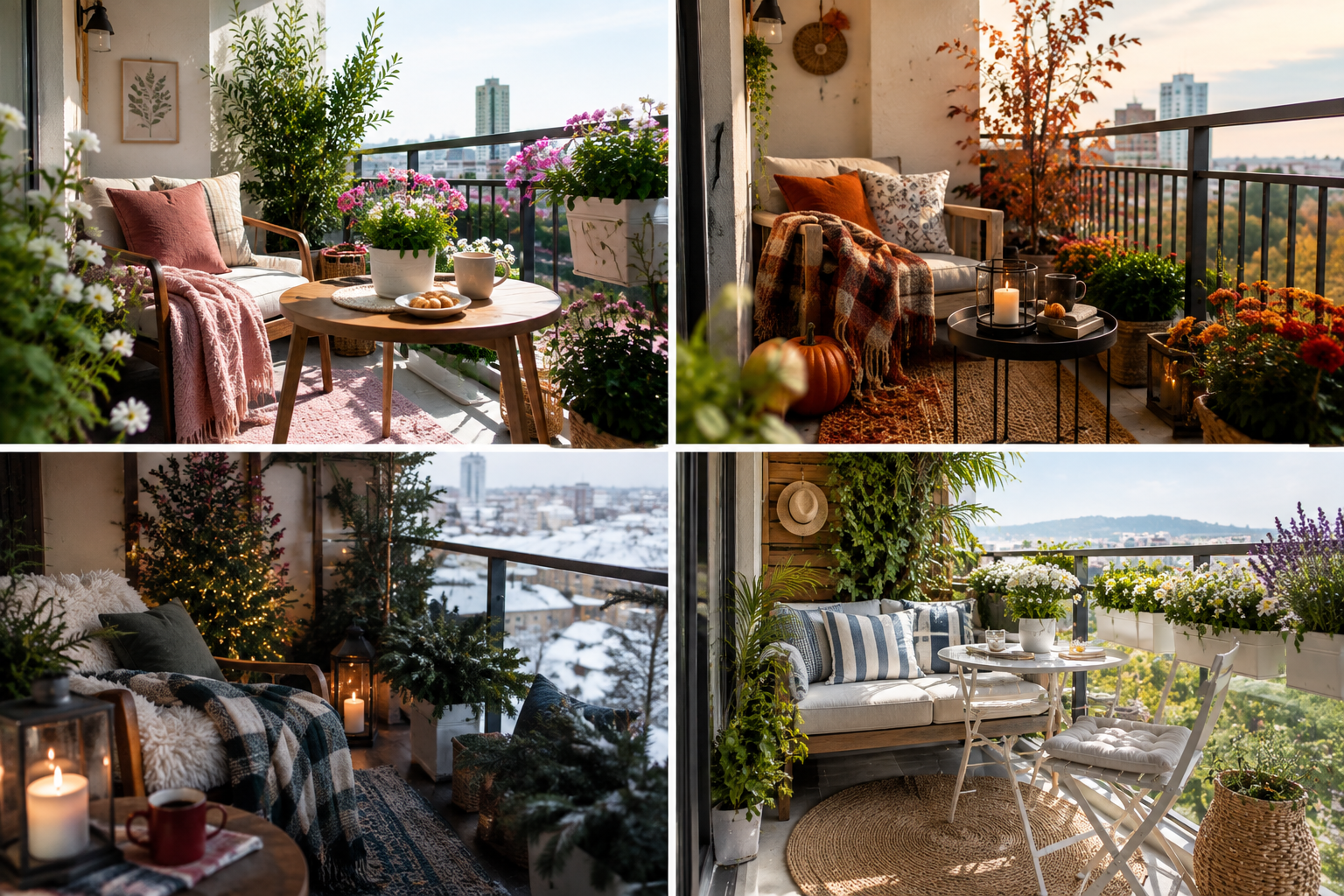
Transforming a compact outdoor footprint into an organized, serene extension of your interior living space requires a rigorous approach to spatial planning. When architectural envelopes measure merely a few square feet, every single linear inch must earn its place through intentional utility and restrained design. Homeowners frequently struggle with maintaining sightlines and protecting personal sanctuaries from visual chaos. Implementing small balcony storage ideas to reduce clutter goes far beyond stashing away unsightly items. It demands a sophisticated calibration of scale, material resilience, and vertical real estate integration. Without a strategic spatial blueprint, urban balconies quickly devolve into catch-all zones that disrupt natural light behavior and fracture the cohesive flow between indoor and outdoor zones. By leveraging architectural discipline, you can mitigate spatial friction, balance tactile finishes, and establish a refined exterior environment that honors both form and function.
Urban balconies present unique physical challenges, including extreme weather exposure, structural weight limits, and restricted clearance paths. Successfully curating these zones begins with analyzing circulation pathways. You must preserve adequate room for movement, comfortable seating placement, and door swing radiuses. Piling storage bins haphazardly against exterior glass panels or blocking natural ventilation routes destroys the inherent elegance of a compact footprint. Instead, professional spatial strategists look upward, utilizing vertical planes and embedding storage directly into multi-functional furnishings. This methodology introduces negative space, which tricks the eye into perceiving a larger area while accommodating essential lifestyle items like gardening tools, cushions, and seasonal decor.
Architectural Principles for Compact Exterior Storage
Designing for restricted spatial footprints requires an unwavering commitment to proportion and visual weight. Bulky standalone cabinets can easily overwhelm a modest balcony, casting deep shadows and obstructing the passage of natural light into adjoining interior rooms. To maintain an airy atmosphere, specify storage components that share the same visual lightness as the surrounding architecture.
Balancing Visual Weight and Negative Space
When selecting containment elements, prioritize low-profile silhouettes that align with the parapet wall or railing height. Keeping storage units below the primary sightline preserves expansive views of the urban landscape or neighborhood greenery. Furthermore, incorporating open-slat designs allows air to circulate freely and prevents heavy shadow pooling. This technique maintains a continuous horizon line, making the balcony feel expansive rather than enclosed.
Tactile Pairings and Weather-Resistant Materials
Exterior storage solutions must endure seasonal fluctuations, UV radiation, and moisture without compromising their structural integrity or aesthetic finish. Material selection dictates longevity and tactile appeal.
- Powder-coated aluminum offers exceptional rust resistance while presenting a sleek, matte profile that complements minimalist aesthetics.
- Teak and sustainably harvested eucalyptus provide rich, warm undertones that develop a sophisticated silver patina over time, introducing organic texture to harsh concrete or metal balconies.
- UV-stabilized synthetic rattan weaves deliver traditional visual warmth without the degradation risks associated with natural fibers under direct sunlight.
- Tempered glass and ceramic tile tops add durable, easily cleaned horizontal surfaces that double as serving trays or plant display stages.
Professional architectural warning: Always verify the structural load limits of cantilevered balconies before introducing dense stone storage units, heavy planters, or water-filled features. Consult building management or a structural engineer to ensure safety compliance.
Strategic Layout Phases for Urban Balconies
Executing a clutter-free balcony transformation follows a precise, sequential workflow. Skipping these phases often results in mismatched furniture purchases and ongoing spatial frustration.
- Audit existing items to isolate essential utility pieces from seasonal or rarely used accessories that belong in interior storage closets.
- Map exact clearance radiuses for sliding doors, outward-swinging windows, and seating arrangements to establish absolute boundaries for storage footprints.
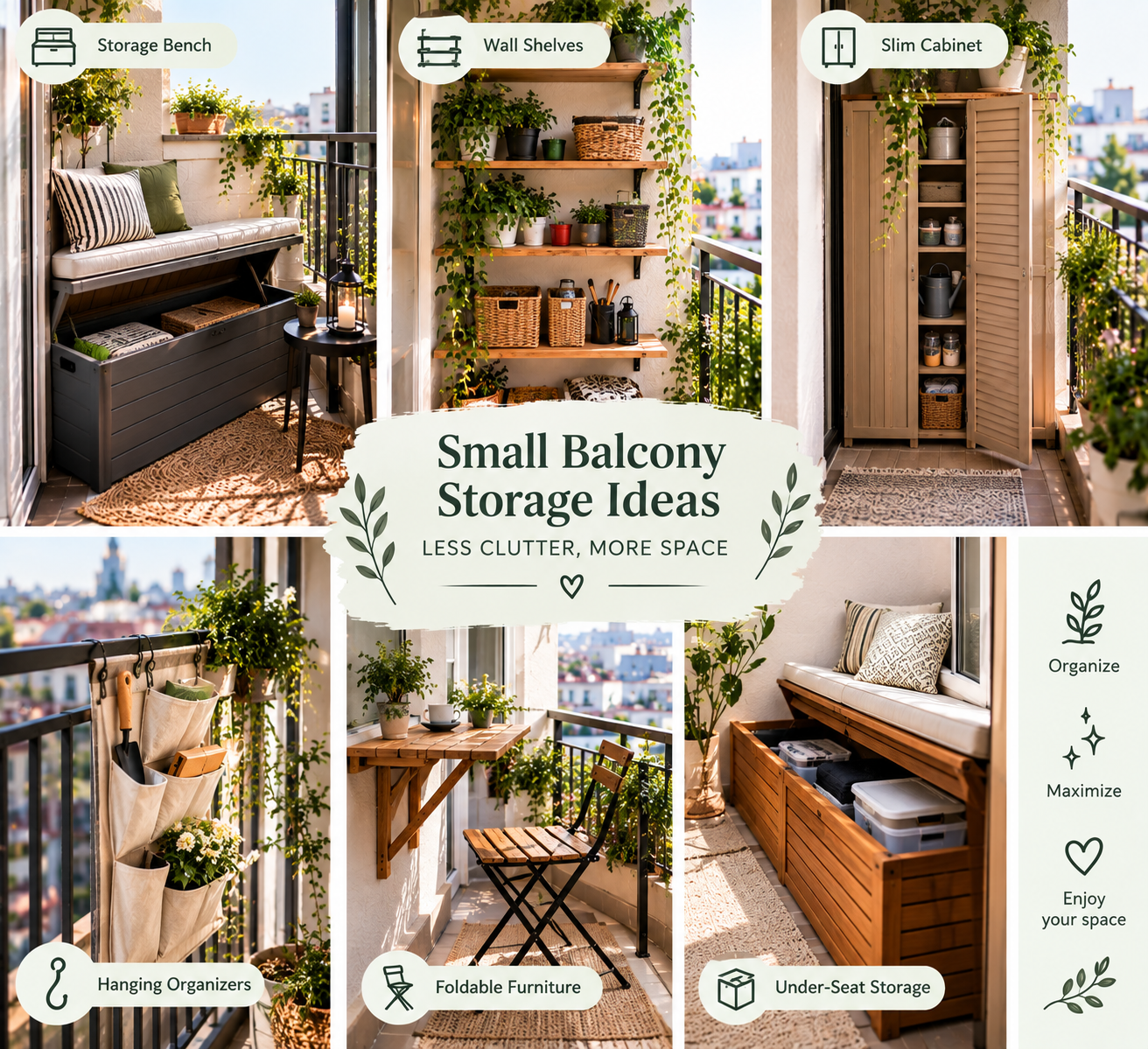
- Select anchor furniture pieces with concealed cavities, such as storage benches with hydraulic lift mechanisms or ottomans featuring removable lids.
- Install vertical wall-mounted shelving or modular peg systems on blank exterior demising walls to exploit unused cubic footage.
- Layer ambient and task illumination to highlight textures and ensure safe navigation around stored items during evening hours.
Comprehensive Material and Dimension Matrix
Evaluating the physical properties and spatial requirements of various storage mediums ensures seamless integration into your balcony layout.
| Storage Medium | Ideal Dimensions | Primary Material Specs | Contrast Ratio and Finish | Best Spatial Application |
|---|---|---|---|---|
| Built-in Bench | 120cm L x 45cm W x 45cm H | Marine-grade plywood with teak slats | High warmth, matte wood grain | Perimeter seating and deep cargo holding |
| Vertical Wall Cabinet | 60cm L x 25cm W x 90cm H | Powder-coated galvanized steel | Monochromatic low-contrast sheen | Above-railing tool and soil organization |
| Railing Planter Box | 90cm L x 20cm W x 20cm H | Extruded aluminum composite | Saturating dark charcoal accent | Horticultural display doubling as privacy screen |
| Nested Stools | 40cm L x 40cm W x 45cm H | Perforated steel and concrete composite | Industrial tactile juxtaposition | Flexible seating with internal hollow cores |
Advanced Vertical and Multi-Functional Storage Strategies
Maximizing a small balcony requires looking beyond floor-standing furniture. The vertical plane offers immense potential for reducing clutter while enhancing the architectural character of the space.
Utilizing Vertical Demising Walls
The exterior walls of your apartment building or home provide a stable anchor for hanging systems. Instead of letting these surfaces remain bare, mount modular vertical rails or stainless steel pegboards. These systems allow you to hang watering cans, pruning shears, and lightweight lanterns off the floor entirely. Keeping the floor plane as clear as possible maximizes reflected light and makes cleaning the balcony surface effortless.
Integrating Dual-Purpose Furnishings
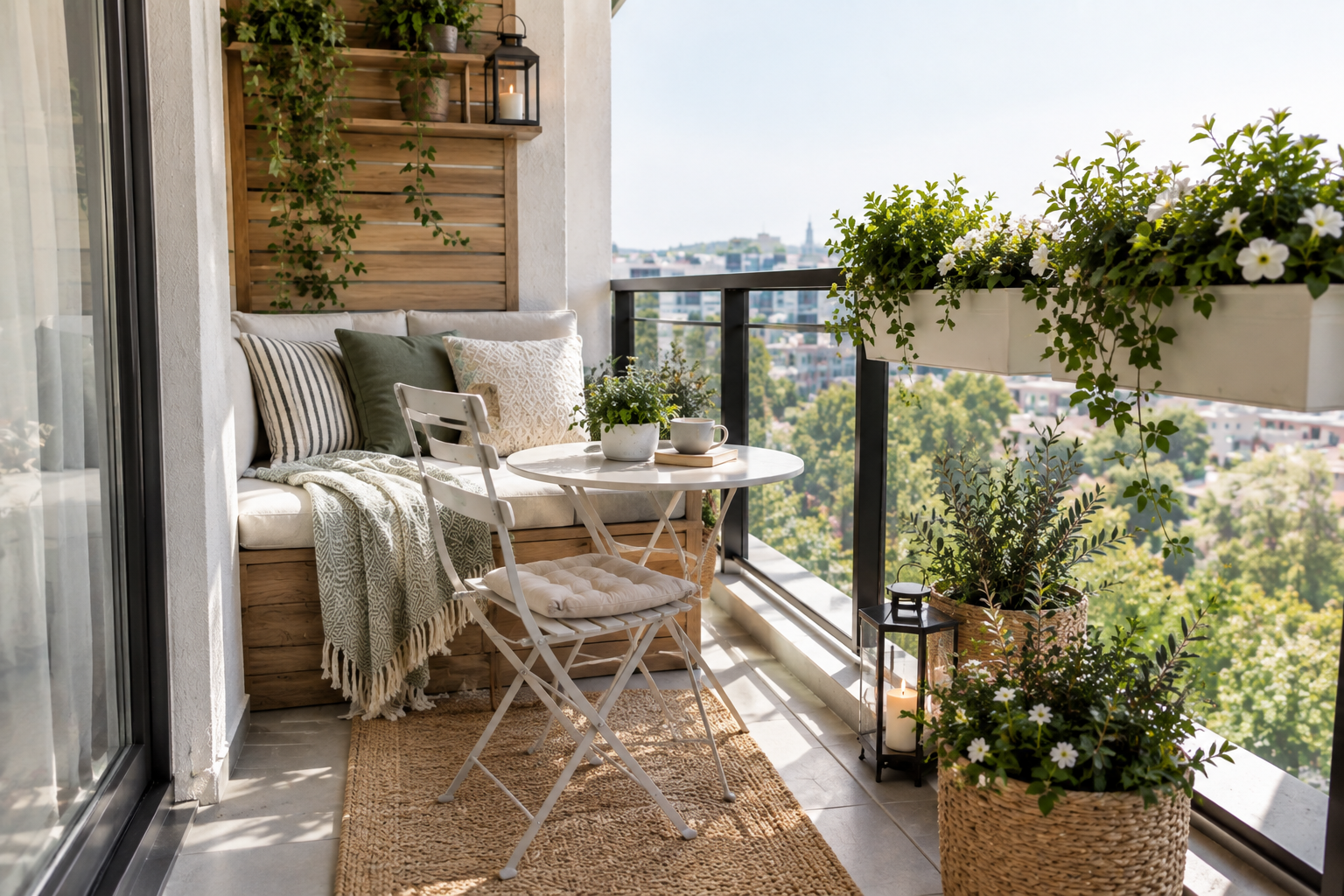
Every piece of furniture on a compact balcony should perform at least two distinct functions. A storage bench not only offers comfortable seating for morning coffee but also houses bulky floor cushions, heavy throws, and outdoor tableware during inclement weather. Similarly, nesting tables with hollow interiors can be pulled apart during entertaining and stacked tightly together when floor space needs to be reclaimed.
Lighting Layers to Enhance Spatial Depth
Illumination plays a vital role in spatial perception and safety on compact balconies. Relying on a single overhead light source flattens the environment and casts harsh shadows that make the area feel cramped. Instead, implement a multi-layered lighting scheme.
- Ambient illumination through discreet wall sconces or perimeter LED strip lighting tucked beneath handrails establishes boundaries and softens the perimeter.
- Task lighting focused near storage units ensures you can easily locate items during twilight hours without fumbling.
- Accent lighting directed upward through ornamental grasses or architectural plants introduces dramatic shadows and creates an illusion of greater height and depth.
Frequently Asked Questions About Small Balcony Storage Ideas to Reduce Clutter
How do I protect outdoor storage boxes from water damage during heavy rain?
Ensure that any exterior storage box features a sloped or overhang lid design that channels rainwater away from the opening seam. Applying marine-grade weather stripping along the interior lip creates an airtight and watertight seal. Additionally, elevating storage units slightly off the concrete floor using rubber feet prevents pooling water from seeping up through the base.
What are the best ways to keep a small balcony looking open while storing many items?
Opt for low-profile furniture that sits beneath your eye level when seated. Utilize vertical wall space rather than crowding the floor, and choose storage containers in colors that match your exterior walls to help them blend into the background. Transparent or perforated materials also reduce the visual mass of storage units, keeping sightlines unobstructed.
Can I use indoor furniture for storage on a covered balcony?
Standard indoor furniture lacks the weather-resistant coatings, moisture seals, and UV-stabilized finishes required for exterior environments. Even on covered balconies, fluctuations in humidity and ambient temperature will cause wood to warp, metal to rust, and fabrics to mold. Always specify outdoor-rated materials engineered to withstand exterior atmospheric conditions.
How do I anchor storage units safely without drilling into exterior walls?
If your lease or architectural guidelines prohibit drilling into exterior walls, rely on gravity-based solutions and weighted freestanding partitions. Tall shelving units can be tension-mounted between the balcony floor and the overhead ceiling overhang. Ensure heavier items are stored in the bottom compartments to maintain a low center of gravity and prevent tipping during high winds.
What materials perform best in coastal environments with high salt exposure?
Coastal environments demand marine-grade stainless steel or heavily powder-coated aluminum to prevent rapid oxidation and rust formation. Avoid standard iron or untreated carbon steel entirely. For wooden elements, specify naturally rot-resistant species like teak or Ipe, and treat them regularly with specialized UV-inhibiting oils to maintain their structural resilience.