Exterior vertical surfaces in urban and suburban compact footprints frequently present an architectural challenge, characterized by monolithic expanses of bare stucco, exposed brick, or weathered siding that drain visual warmth from an outdoor living space. Evaluating balcony wall decor ideas to transform blank walls requires a nuanced understanding of environmental exposure, microclimates, structural load-bearing limits, and spatial psychology. Rather than treating an outdoor perimeter as an afterthought, professional designers approach these vertical planes as primary architectural elevations. These surfaces dictate the transition between interior sightlines and exterior vistas, balancing hard structural lines with organic softness. Direct exposure to ultraviolet radiation, driving rain, fluctuating thermal gradients, and wind shears demands a rigorous methodology for material selection, anchoring hardware, and weathering capacity. By addressing spatial constraints, optimizing light reflection, and curating tactile contrasts, a neglected exterior surface evolves into a sophisticated extension of the interior living ecosystem, operating with both aesthetic rigor and structural integrity.
Architectural Foundations and Spatial Psychology of Vertical Surfaces
Transforming an exterior vertical plane begins with a thorough structural assessment and an evaluation of spatial proportions. Balconies inherently compress volume, meaning vertical planes bear the primary responsibility for establishing architectural scale. When designing for these compact envelopes, avoiding visual clutter is paramount. Every decorative element must serve a distinct purpose, whether it breaks up a monotonous expanse of plaster or amplifies available natural light.
Balancing Visual Weight and Negative Space
Negative space functions as an active design element rather than mere emptiness. Leaving strategic portions of a wall exposed prevents visual fatigue and allows the eye to rest. When deploying large-scale installations, such as vertical gardens or expansive metal screens, anchoring them correctly ensures the composition maintains equilibrium. Heavy, textured elements like slate panels or dense green walls should be grounded lower on the elevation, while lighter elements like minimalist sconces or floating frames occupy upper tiers.
Managing Light Behavior and Reflectivity
Sunlight exposure changes dramatically throughout the day on an open-air platform. North-facing walls receive diffused, cool light that benefits from warm undertones and high-reflectance finishes like polished brass or white-glazed ceramics. South-facing or west-facing walls experience intense thermal gain and glaring brightness. These high-exposure zones require matte finishes, textured stone, or charred timber treatments that absorb harsh rays and create deep, dynamic shadow plays.
Material Selection for Exterior Vertical Installations
Durability dictates every specification decision made for an outdoor environment. Interior-grade materials degrade rapidly under elemental stress, resulting in warping, corrosion, fading, and structural failure. Curating a cohesive palette requires selecting elements engineered specifically for exterior resilience without sacrificing tactile luxury.
| Material Category | Best Exterior Applications | Durability & Maintenance Profile | Aesthetic Impact |
|---|---|---|---|
| Marine-Grade Stainless Steel & Aluminum | Minimalist wall art, structural hanging frames, sleek lighting fixtures | Exceptional corrosion resistance; requires occasional washing to prevent salt and pollutant buildup. | Sleek, modern, industrial refinement with clean lines. |
| Accoya & Teak Wood | Slatted privacy screens, floating ledges, modular planters | High dimensional stability; naturally repels moisture and rot; needs annual UV-protectant oiling to retain tone. | Organic warmth, rich grain patterns, tactile softness. |
| Porcelain & Ceramic Tile | Mosaic murals, patterned feature panels, textured cladding | Impervious to water absorption; highly frost-resistant; exceptionally easy to clean. | Vibrant color saturation, geometric precision, classic heritage appeal. |
| Preserved Moss & Artificial Foliage Panels | Vertical gardens, acoustic dampening panels, soft green backdrops | UV-resistant formulations prevent fading; zero watering requirements; secure mounting needed for high winds. | Biophilic immersion, lush texture, vibrant botanical color. |
Core Strategies for Vertical Surface Transformation
Executing a successful spatial redesign requires moving through a structured workflow that prioritizes structural safety, layout precision, and aesthetic layering. The following phased methodology ensures that every installation enhances both the ergonomics and visual depth of the balcony.
-
Structural Auditing and Load Capacity Calculation: Before fastening any hardware, determine the substrate composition, whether it is poured concrete, reinforced steel framing, or hollow exterior insulation finishing systems. Calculate the ultimate weight capacity of hanging installations, particularly when incorporating soil-filled vertical planters or heavy stone tile assemblies, to prevent structural compromise.
-
Circulation and Clearance Mapping: Analyze the physical swing of doors, the placement of seating furniture, and primary pathways. Ensure that protruding wall decor, such as deep floating shelves or projecting sconces, maintains a minimum clearance distance to prevent obstruction and accidental impact.
-
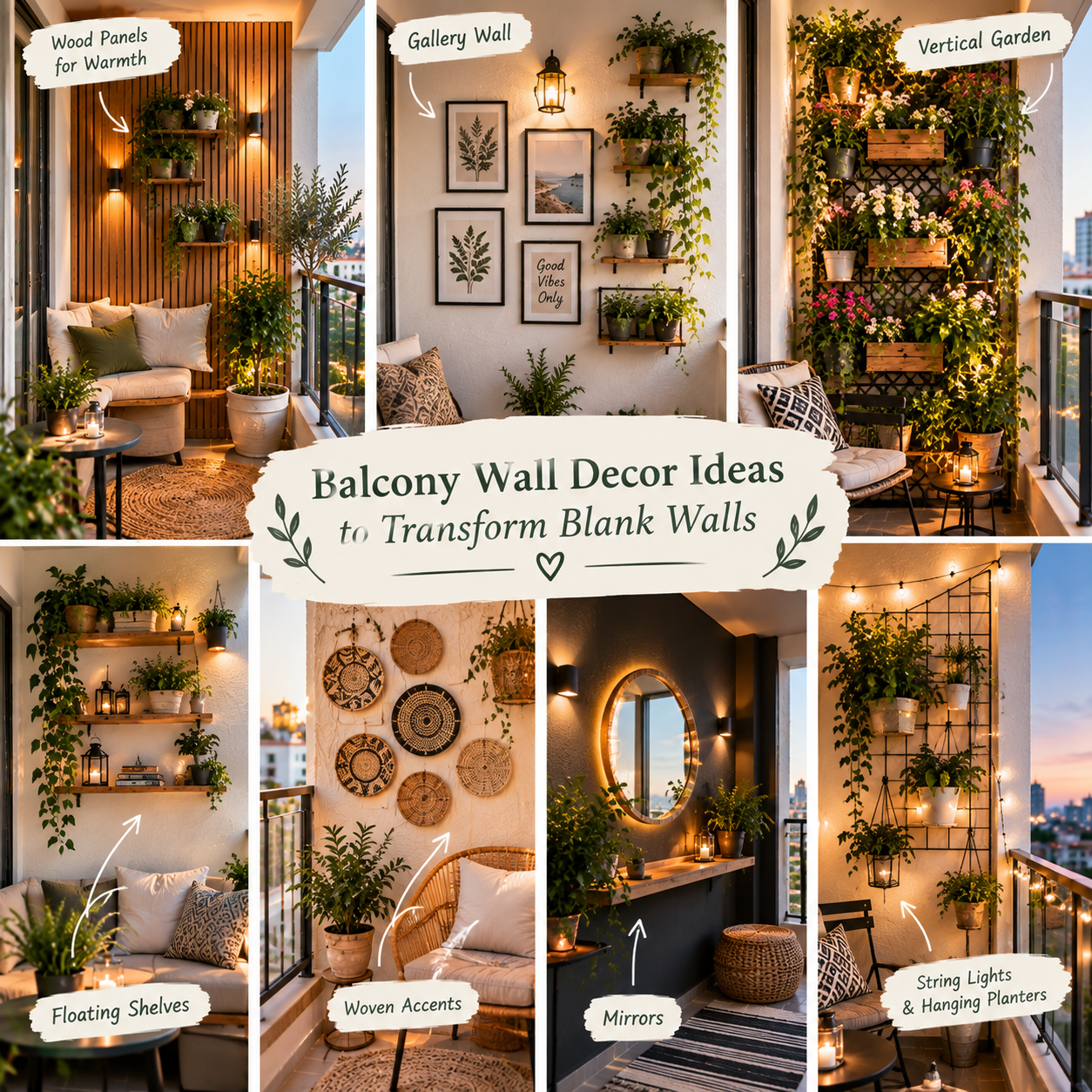
Establishing the Focal Anchor: Select a single primary element to anchor the elevation. This could be a large-scale triptych of weather-treated metal panels, a dramatic living wall system, or an expansive antique mirror treated with antique silver backing to withstand humidity.
-
Layering Accent Elements and Illumination: Surround the primary focal anchor with secondary items such as asymmetric planters, compact wall-mounted lanterns, or woven textile hangings. Integrate multi-tiered lighting to graze the wall surfaces, emphasizing underlying textures once natural daylight fades.
Stylistic Doctrines and Design Archetypes
Selecting an overarching design theme ensures that the balcony wall harmonizes with the interior architectural language of the home. Cohesion between indoor and outdoor spaces expands perceived square footage and creates a seamless visual transition.
-
Biophilic Sanctuary: Emphasizes living greenery, preserved boxwood panels, and reclaimed teak planters. This approach utilizes natural botanical geometry to soften hard urban perimeters, introducing organic movement and acoustic dampening properties.
-
Industrial Modernist: Relies on expanded metal mesh screens, matte black sconces, exposed concrete tiles, and geometric weathering steel art pieces. The focus remains on stark contrast, structural honesty, and unadorned utility.
-
Mediterranean Terracotta: Focuses on hand-glazed ceramic plates, distressed plaster finishes, wrought iron candle sconces, and climbing vines secured on stainless steel wire trellises. This style celebrates warmth, patina, and tactile heritage.
-
Japandi Minimalism: Combines charred timber slats using the shou sugi ban technique, neutral slate tiles, minimalist bamboo lighting fixtures, and asymmetrical negative space arrangements. The emphasis rests on tranquility, wabi-sabi imperfection, and restrained elegance.
Critical Professional Warning: Never drill directly into exterior insulation and finish systems without consulting structural blueprints. Improper anchoring through foam layers creates thermal bridging, compromises moisture barriers, and invites water infiltration that leads to hidden interior mold and structural degradation.
Advanced Lighting Techniques for Vertical Elevations
Illumination serves as the defining architectural layer that elevates a balcony after dusk. Relying on a single overhead source flattens the vertical plane, whereas a multi-layered lighting plan sculpts volume, casts dramatic shadows, and highlights material patinas.
Ambient illumination establishes the base glow, often achieved via low-voltage LED strip lights concealed behind floating wall panels or integrated into the underside of overhead overhangs. Accent illumination utilizes directional spotlights or adjustable wall uplights to graze textured surfaces, drawing the eye across rough-hewn stone or slatted timber screens. Task illumination, such as weather-rated reading sconces positioned near a balcony lounge chair, provides functional utility without compromising ambient sophistication. Selecting fixtures with warm color temperatures between twenty-seven hundred and three thousand Kelvin ensures that the outdoor environment remains inviting, cozy, and visually balanced with interior living spaces visible through glass doors.
Frequently Asked Questions About Balcony Wall Decor Ideas to Transform Blank Walls
How do I protect outdoor wall decor from severe weather and wind damage?
Securing outdoor decor requires hardware rated specifically for exterior applications, such as marine-grade stainless steel screws, heavy-duty masonry anchors, and resilient mounting brackets. For windy high-rise environments, avoid lightweight plastic or loose hanging elements that can detach. Instead, opt for flush-mounted panels, heavy ceramic items secured with proprietary fastening systems, or flexible cable trellises anchored securely at both top and bottom tracks to minimize sway and vibration.
What are the best plants to use on a vertical balcony wall?
Selecting the right flora depends entirely on your balcony orientation and microclimate exposure. For shaded spaces, varieties such as ferns, hostas, and pothos thrive and maintain lush foliage. For sun-drenched, south-facing exposures, drought-tolerant succulents, creeping rosemary, trailing sedum, and hardy ornamental grasses withstand intense thermal radiation with minimal irrigation requirements. Always ensure your vertical planting system features proper drainage layers to prevent root rot and protect the wall substrate below.
Can I hang heavy mirrors or art pieces on an exterior balcony wall?
Hanging heavy items outdoors is entirely feasible provided you use the correct structural fastening techniques. For concrete or brick masonry walls, use hammer-drill bits and expansion sleeve anchors designed for heavy loads. For wood siding or stucco, locate the underlying studs or framing members to drive structural lag screws. Additionally, select mirrors treated with exterior-grade sealed backings to prevent moisture ingress from blackening the reflective silver coating over time.
How can I cover an ugly balcony wall without drilling holes?
If rental restrictions or HOA guidelines prohibit drilling into exterior surfaces, tension-rod systems offer an ideal non-permanent solution. Floor-to-ceiling pressure-fit poles allow you to mount slatted wood screens, hanging planters, or fabric panels without leaving structural damage. Alternatively, heavy-duty exterior adhesive hooks rated for significant weight can support lightweight woven textiles, macrame plant hangers, or modular felt pocket planters.
How do I maintain balcony wall decor to prevent fading and mold?
Routine maintenance preserves the visual integrity of outdoor vertical installations. Wash metal and porcelain surfaces seasonally with mild, pH-balanced soap and water to remove urban pollutant residue and salt buildup. Treat exposed wood surfaces annually with a penetrating exterior oil or UV-blocker sealer to prevent graying and moisture absorption. For living or preserved moss walls, inspect periodically for trapped moisture, and ensure adequate airflow across the wall surface to inhibit mold and mildew proliferation.