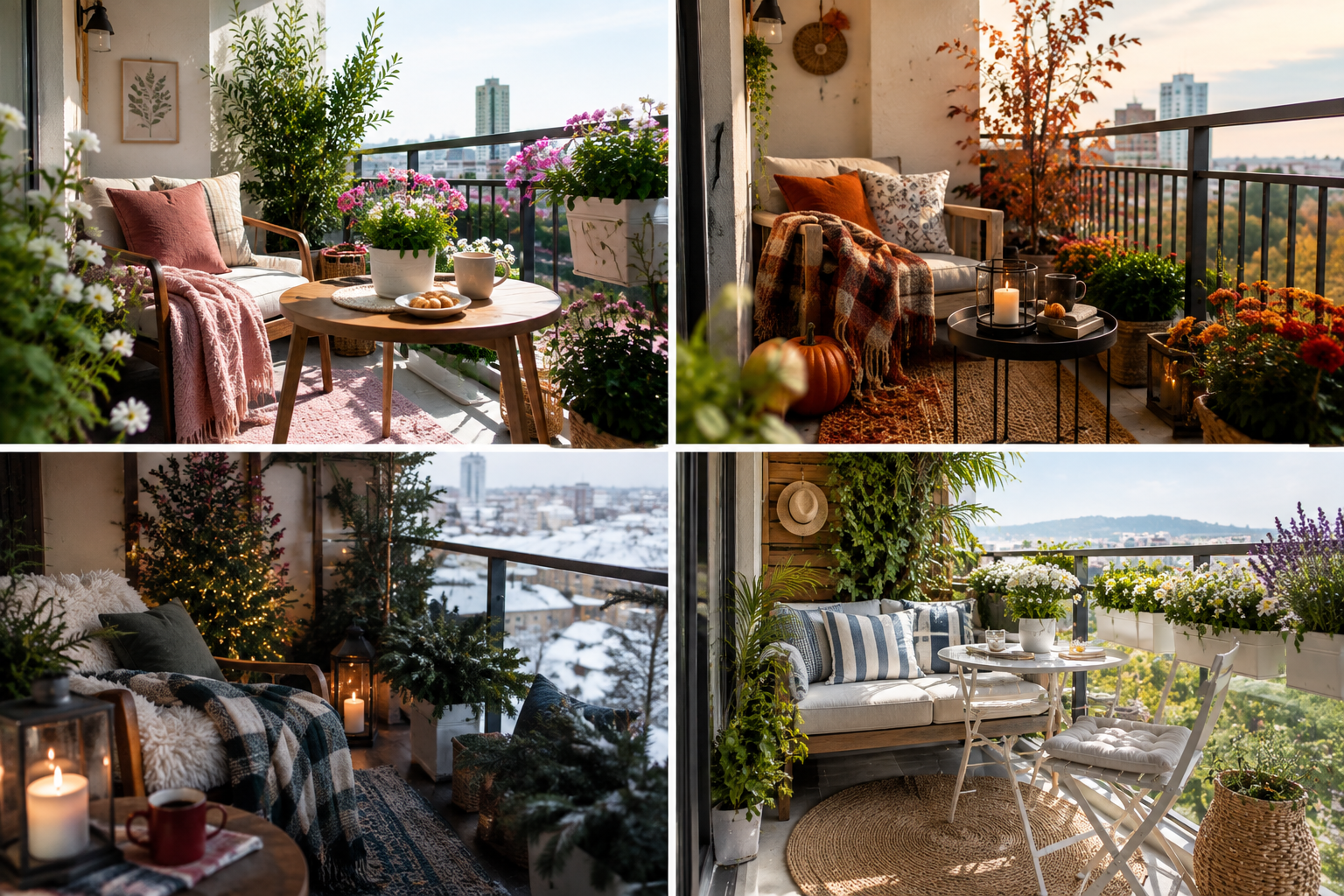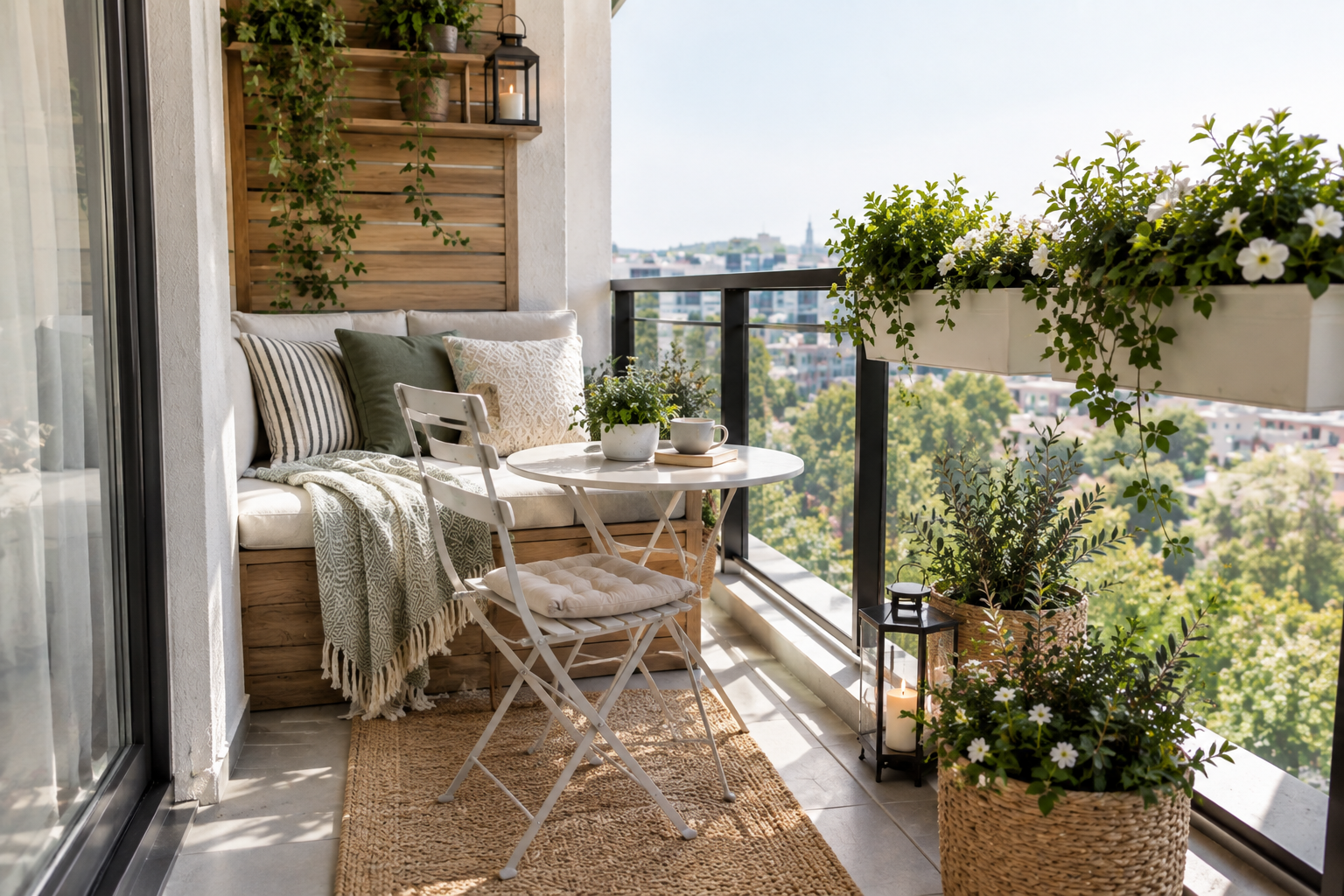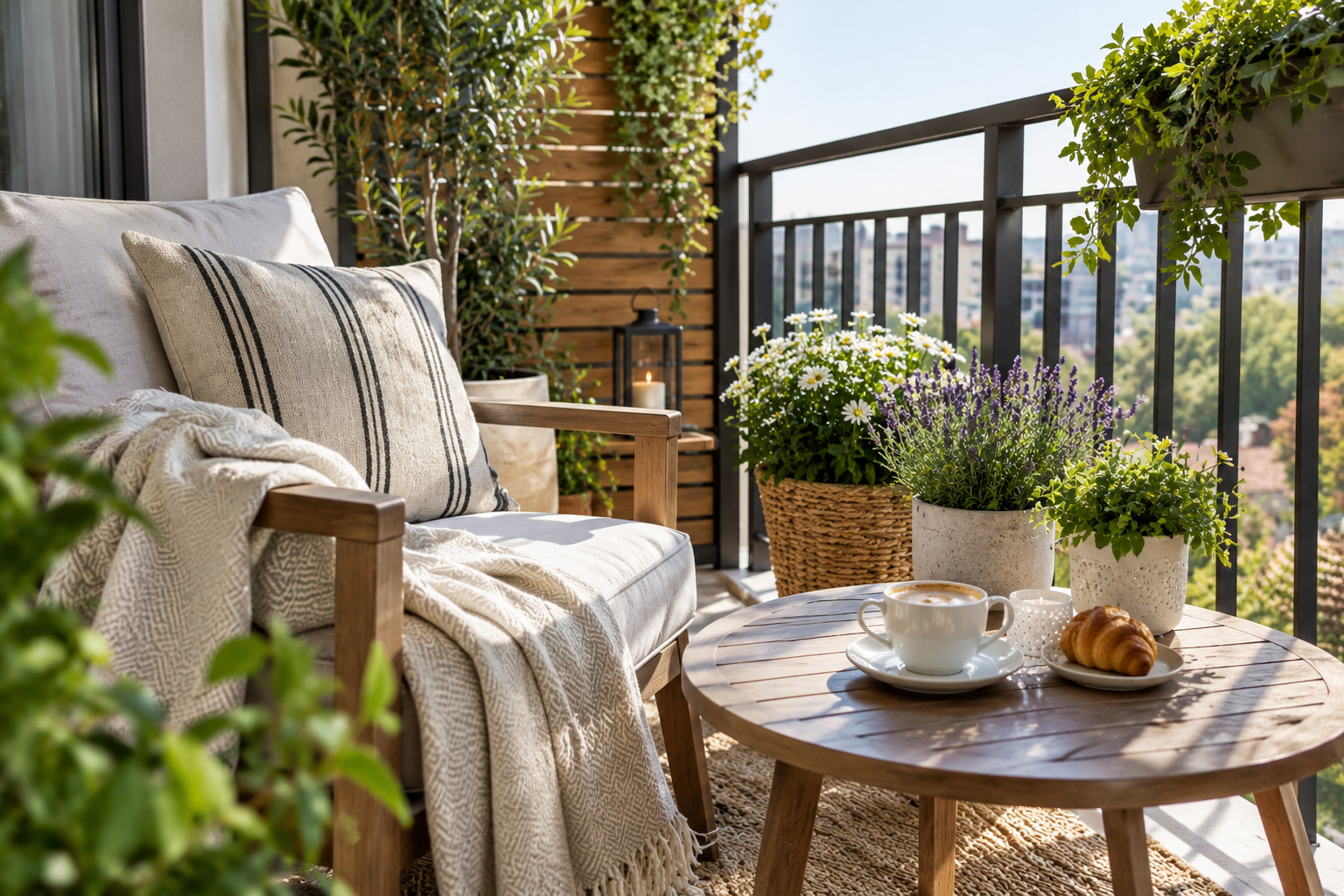
Urban balconies often present distinct architectural friction points. Limited square footage, harsh microclimates, relentless ultraviolet exposure, and high wind shear transform what should be a private sanctuary into an uninviting spatial challenge. When curating an open-air retreat, selecting the best outdoor textiles for a comfortable balcony requires a sophisticated calibration between sensory tactile warmth and extreme industrial resilience. Standard indoor fabrics rapidly degrade under thermal shock and moisture fluctuations, while purely utilitarian canvas lacks the acoustic dampening and physical softness necessary to create a truly restorative lounge area. Designing a high-performance open-air living space demands an intimate understanding of how natural and synthetic fibers interact with direct sunlight, ambient humidity, and spatial boundaries. By carefully orchestrating fabric weights, weave densities, color undertones, and tactical layering, a modest concrete slab can evolve into a seamless extension of your interior architecture. This guide explores the advanced material science, spatial proportions, and curation strategies required to master exterior soft furnishings without sacrificing aesthetic rigor.
Architectural Foundations and Spatial Proportions in Balcony Textile Design
Before introducing any soft elements to an exterior zone, an experienced designer must analyze the spatial envelope. Balconies typically feature hard, reflective surfaces such as concrete, glass, powder-coated steel, and ceramic tile. These materials bounce sound waves and solar radiation, creating acoustic glare and thermal discomfort. Strategically deployed textiles function as both visual anchors and acoustic dampeners, absorbing high-frequency city noise while softening the harsh geometry of structural railings and partition walls.
Scale and proportion dictate whether a balcony feels expansive or claustrophobic. Oversized patterns can overwhelm a narrow footprint, whereas micro-textures executed in uniform palettes expand perceived negative space. Circulation paths must remain unobstructed. Fabric drops, floor cushions, and drapery panels must be measured meticulously to account for wind behavior, ensuring textiles do not catch hazardously on railings or impede door swings.
Professional Design Directive: Never treat exterior textiles as an afterthought. Coordinate fabric color undertones with the surrounding facade materials, window frame finishes, and interior flooring transitions to maintain visual continuity across the threshold.
To successfully integrate textiles into an open-air architectural framework, professionals evaluate fabrics across several performance metrics:
- Ultraviolet colorfastness ratings to prevent premature fading under direct solar radiation.
- Hydrophobic treatments or inherently moisture-resistant core compositions to deter mildew and mold growth.
- Tensile strength and tear resistance to withstand high-rise wind loads.
- Tactile friction coefficients that ensure seat cushions remain stable without sliding on smooth stone or metal bases.
- Ease of maintenance, prioritizing removable covers with industrial-grade corrosion-resistant zippers.
Advanced Material Science: Choosing the Right Exterior Fibers
The marketplace offers a vast array of technical fabrics engineered specifically for marine and exterior architecture. Understanding the molecular construction of these materials ensures long-term structural integrity and sustained visual appeal. The best outdoor textiles for a comfortable balcony balance high-performance polymers with sophisticated weaves that mimic natural linen, wool, or heavy cotton.
Solution-Dyed Acrylics and Olefins
Solution-dyed acrylic represents the gold standard for exterior upholstery. During the manufacturing process, liquid pigment is mixed directly into the polymer solution before the fiber is extruded. This ensures that the color penetrates completely to the core, rendering the yarn exceptionally resistant to fading from ultraviolet exposure, bleach cleaning agents, and harsh environmental pollutants. Olefin, a synthetic fiber derived from polyolefin, offers superior moisture management and dries rapidly because it absorbs virtually zero water. Olefin also possesses a lighter specific gravity than acrylic, making it ideal for lightweight throws and removable cushion covers that require frequent laundering.
PVC-Coated Polyester and Marine-Grade Vinyl
For high-traffic seating or areas exposed to driving rain and heavy urban soot, PVC-coated polyester mesh provides unmatched structural stability and breathability. The open weave allows air circulation underneath seated occupants, preventing heat buildup during peak summer afternoons. Marine-grade vinyl offers an impermeable barrier against spills and humidity, though it requires careful color selection and strategic textural contrast to avoid looking overly commercial.
| Fiber Type | UV Resistance | Moisture Management | Tactile Profile | Ideal Balcony Application |
|---|---|---|---|---|
| Solution-Dyed Acrylic | Exceptional | Good (Dries quickly) | Soft, linen-like hand | Primary lounge upholstery and throw pillows |
| Olefin | High | Superior (Zero absorption) | Lightweight, smooth | Modular cushion covers and casual floor poufs |
| PVC-Coated Polyester | High | Impermeable / Mesh | Structured, firm | Sling chairs and modern sun loungers |
| Recycled PET Yarn | Moderate to High | Excellent | Wool-like or heavy cotton feel | Balcony area rugs and decorative floor throws |
Color Theory, Light Behavior, and Visual Weight
Natural light behaves differently outdoors than it does inside a controlled interior environment. Direct sunlight washes out pale pastel hues, turning soft creams into blinding whites, while deep saturated tones absorb solar heat rapidly. When selecting the best outdoor textiles for a comfortable balcony, consider the orientation of your outdoor space.
- South-facing and west-facing balconies receive intense afternoon sun, requiring high-rated UV-stable dark neutrals, charcoal greys, rich terracottas, or deep indigos that anchor the visual weight and minimize glare.
- North-facing and east-facing balconies experience cooler, diffused light, benefiting from warm ochres, muted olives, and creamy oatmeals that maximize ambient brightness without feeling stark.
- Shaded or covered loggias allow for more delicate layering, including pale ivories, fine natural textures, and subtle geometric patterns that enhance spatial depth.
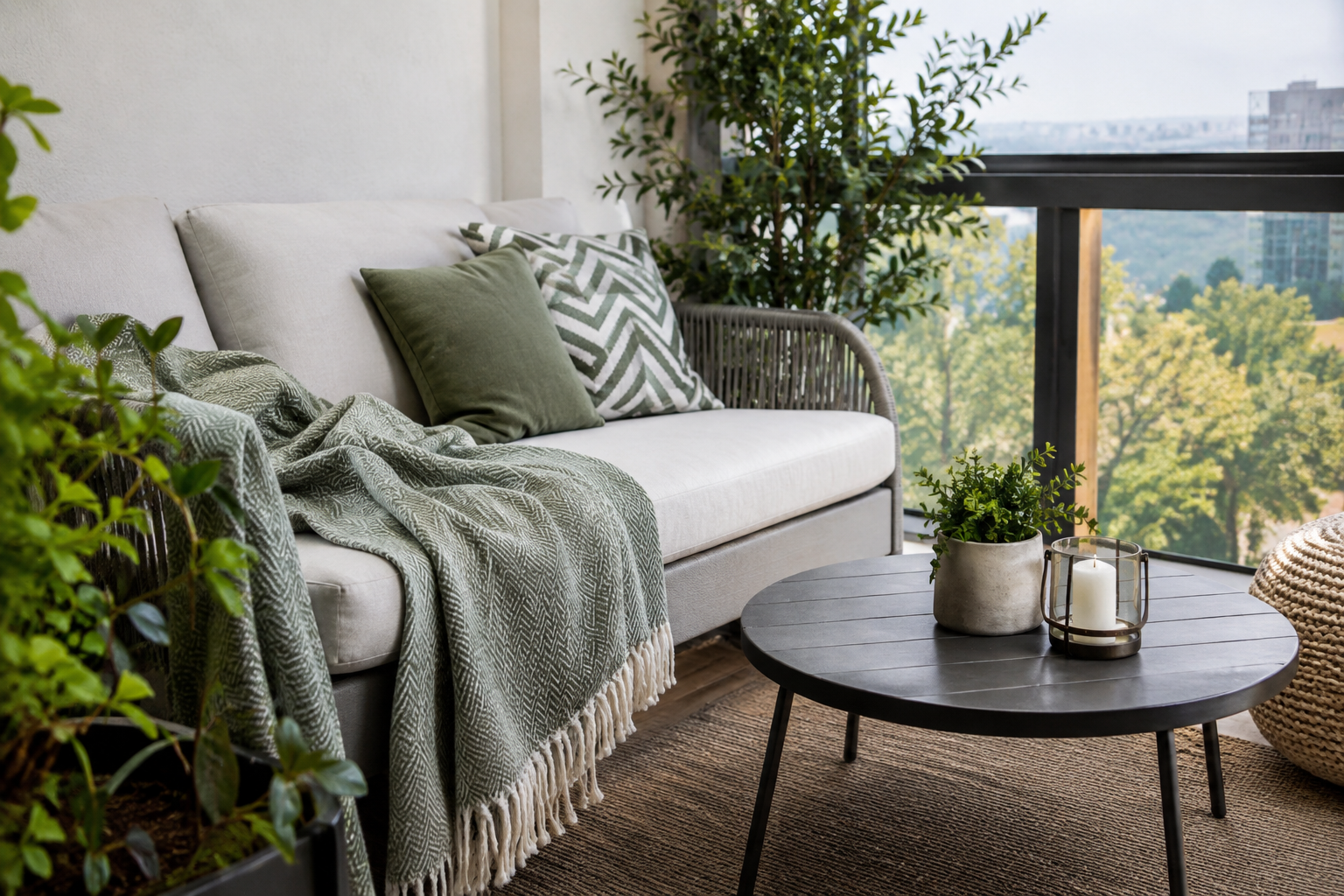
Visual weight is modulated through contrast and texture density. If your balcony features heavy iron railings or dark stone cladding, balance the architecture by introducing lighter, tactile textiles such as chunky-knit recycled PET throws or open-weave linen-look drapery panels. Conversely, if the balcony features sleek glass balustrades and minimalist white stucco, ground the space with heavier, saturated upholstery fabrics and textured area rugs to establish a solid visual focal point.
Tactile Layering: From Hard Surfaces to Sensory Comfort
Achieving true comfort on an urban balcony requires a multi-tiered approach to soft furnishings. Relying solely on a single bench cushion creates a flat, uninspired environment. A sophisticated outdoor design mimics interior living rooms by layering tactile elements of varying heights, densities, and material compositions.
Grounding the Space with Exterior Rugs
The floor plane is often the most neglected surface on a balcony. Cold concrete or hard tile shatters the illusion of an outdoor living room. Introducing an exterior area rug woven from solution-dyed synthetic fibers or recycled PET bottles immediately transforms the tactile experience underfoot. Beyond sensory comfort, an area rug defines the conversation zone, masks imperfections in aging concrete slabs, and dampens vertical sound reflections bouncing off adjacent building facades.
Upholstery Density and Ergonomics
Outdoor seating must combine structural support with plush relaxation. High-resilience polyurethane foam wrapped in Dacron fiber and encased in waterproof ticking ensures that seat cushions retain their loft and ergonomic profile over years of use. For backrests, consider softer blown-fiber fills housed in channeled compartments to prevent the filling from shifting or sagging over time.
Pillows, Throws, and Architectural Drapery
Decorative accessories offer an agile way to introduce seasonal color trends and localized softness. Mix lumbar pillows with square throw cushions, varying the scale of prints from micro-stripes to large-scale botanical motifs. For balconies exposed to wind or curious neighboring sightlines, exterior drapery tracks mounted to the overhead soffit allow for functional fabric panels. These panels provide wind buffering, privacy screening, and cinematic diffusion of harsh horizontal sunlight during golden hour.
Multi-Layered Illumination and Textile Interaction
Illumination dramatically alters how textiles are perceived after sunset. A poorly lit balcony renders rich fabrics invisible, while harsh overhead glare flattens spatial depth. To maximize the comfort and aesthetic richness of your outdoor textiles, deploy a multi-layered lighting strategy combining ambient, task, and accent illumination.
- Ambient illumination can be achieved through integrated LED strips concealed beneath floating bench seating or architectural planters, washing upward across textured wall surfaces and fabric backrests.
- Task lighting, such as portable rechargeable cordless lamps placed on side tables, provides focused illumination for reading or dining without creating visual clutter.
- Accent illumination highlights the tactile qualities of woven materials, using low-voltage directional spotlights to cast dramatic shadows across textured cushions, slatted wood screens, and patterned area rugs.
By pairing sophisticated illumination with performance fabrics, the balcony transitions effortlessly from a bright daytime workspace or relaxation zone into an intimate, cocoon-like evening retreat.
Frequently Asked Questions About Best Outdoor Textiles for a Comfortable Balcony
How do I clean and maintain outdoor balcony textiles during seasonal changes?
Routine maintenance involves brushing away loose debris, dust, and organic matter weekly using a soft-bristled brush. For deeper cleaning, mix a mild dish soap with lukewarm water, apply it to the fabric surface, allow it to penetrate briefly, and rinse thoroughly with clean water. Avoid using high-pressure washers, as they can break down fabric backing and stitch lines. Always allow cushion covers to dry completely in a well-ventilated area before storing them during harsh winter months.
Can indoor fabrics be used on a balcony if they are kept under a covered roof?
Using indoor textiles on a covered balcony is generally discouraged. Even protected loggias experience high relative humidity, airborne moisture, temperature fluctuations, and indirect ultraviolet radiation. Standard indoor fibers lack the necessary mildew inhibitors and UV stabilizers, leading to rapid fiber degradation, color fading, and mold proliferation within the foam core.
What is the best way to prevent outdoor cushions from sliding on metal or concrete furniture?
To eliminate cushion slippage, apply non-skid rubberized rug pads or mesh underlayment cut to the exact dimensions of the seating surface. Alternatively, specify custom cushion fabrication that incorporates heavy-duty fabric ties, hook-and-loop fasteners, or weighted interior panels designed to anchor the cushion securely to the furniture frame.
How do I choose patterns and colors that make a small balcony feel larger?
To maximize spatial perception on a compact balcony, prioritize a cohesive, monochromatic color palette utilizing soft neutrals, cool greys, or muted earth tones. If incorporating patterns, select restrained geometric prints or subtle linear stripes that direct the eye along the longest sightlines of the space. Avoid heavy, high-contrast dark patterns that visually compress the perimeter and make the footprint feel restricted.