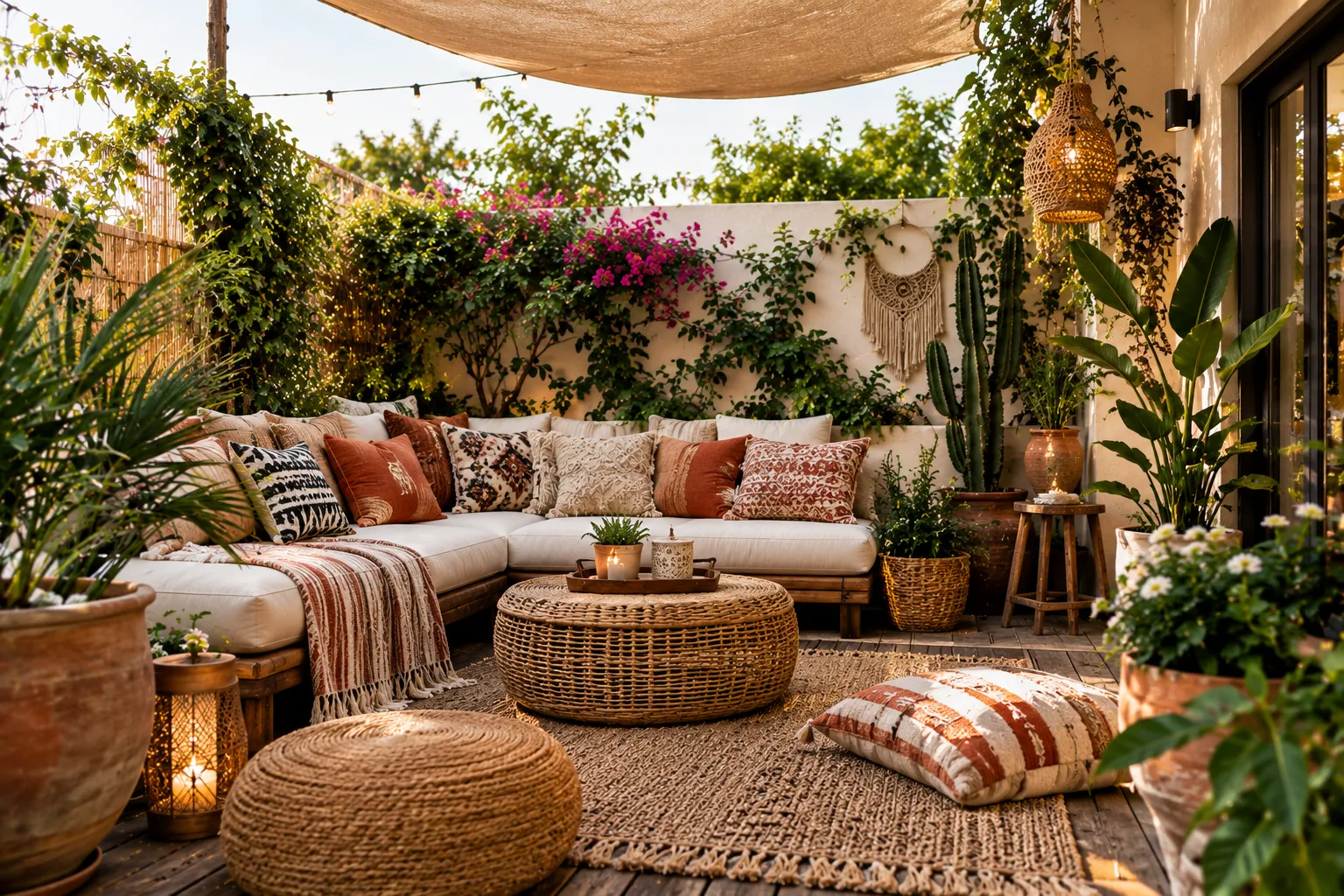
Designing an exterior sanctuary requires balancing raw structural elements with soft, inviting textiles. When approaching outdoor spatial planning, homeowners frequently struggle with stark boundaries, harsh afternoon glare, and patios that feel disconnected from the surrounding landscape. Relying solely on synthetic furniture and manicured lawns often results in a rigid, unwelcoming environment that lacks soul. Introducing boho garden decor ideas for a relaxed outdoor atmosphere completely shifts this dynamic by prioritizing organic textures, rich cultural layering, and fluid transitions between architecture and nature. As an architectural consultant and editorial designer, I approach these projects by analyzing light behavior, circulation paths, and tactile pairing. By intentionally mixing distressed woods, aged metals, breathable fabrics, and lush, unruly botanicals, you can neutralize architectural harshness and craft an immersive escape that encourages slow living.
The core philosophy of bohemian design rests upon controlled eclecticism. Rather than matching furniture sets or relying on uniform color palettes, this aesthetic celebrates collected-over-time character, artisanal craftsmanship, and deeply personal narratives. However, translating this indoor-centric style to the outdoors demands a strategic approach to material science and spatial composition. Weather resistance, wind loads, UV degradation, and drainage must inform every design choice. The following comprehensive blueprint outlines the structural and decorative principles required to curate a high-end, durable, and deeply relaxing bohemian garden space.
Establishing the Spatial Foundation and Architectural Flow
Before introducing decorative accessories, you must evaluate the hardscape and layout of your outdoor room. A successful bohemian garden relies heavily on broken-plan zoning, which creates distinct micro-environments for lounging, dining, and quiet contemplation. Circulation paths should meander rather than cut straight lines through the space, encouraging a slower pace of movement.
Defining Zones with Ground Cover and Low-Level Architecture
To ground your seating areas, incorporate natural fiber rugs made from jute, sisal, or recycled polypropylene. These elements define boundaries on concrete slabs or stone patios without permanently altering the architecture. Consider building low, built-in wooden daybeds or concrete banquettes layered with oversized floor cushions. This low-slung seating arrangement alters traditional sightlines, making the ceiling of the sky feel closer and fostering an intimate, grounded atmosphere.
- Analyze the existing sun and shade paths over a twenty-four-hour cycle to determine optimal lounging zones.
- Clear unnecessary hardscape clutter to establish negative space, which prevents the eclectic decor from feeling chaotic.
- Install low-profile timber or stone edging to separate uncultivated planting beds from foot traffic corridors.
- Position structural furniture anchors away from primary wind tunnels to ensure safety and stability for lightweight decor.
Successful bohemian design relies on calculated asymmetry. Never force symmetry into an organic garden layout; instead, balance heavy visual anchors like a large pergola against delicate, swaying ornamental grasses on the opposite side of the sightline.
Textural Layering and Material Selection for Outdoor Longevity
The tactile experience of a bohemian garden distinguishes it from traditional landscape designs. You must curate a diverse palette of materials that age gracefully under exterior conditions. Highlighting the patina of weathered surfaces adds authenticity and depth to the overall scheme.
- Rattan and Wicker: Introduce structural seating and hanging chairs crafted from natural or synthetic rattan to bring organic warmth and curvature to rectilinear architecture.
- Terracotta and Ceramics: Utilize unglazed terracotta pots, hand-thrown urns, and mosaic-tiled tabletops to introduce earthy warmth and rich mineral undertones.
- Distressed Wood: Incorporate reclaimed teak, weathered oak, or driftwood for tables, pergolas, and decorative screens to showcase natural grain and history.
- Raw Metals: Integrate aged brass, antiqued copper, and hammered iron through lanterns, plant stands, and fire bowls to provide a subtle industrial contrast.
Selecting fabrics requires balancing aesthetic desires with extreme weather resistance. Canvas, untreated linen, and delicate cottons will degrade rapidly when exposed to persistent moisture and UV radiation. Instead, source solution-dyed acrylics, heavy-duty outdoor velvets, and textured polyester blends that mimic the hand-feel of raw natural fibers while offering superior mold and fade resistance.
| Material Category | Recommended Application | Durability Factor | Maintenance Requirement |
|---|---|---|---|
| Reclaimed Teak | Dining tables, benches, architectural screens | Exceptional natural weather resistance | Annual oiling optional; naturally weathers to a silver-grey patina |
| Polypropylene Cord | Hanging egg chairs, woven lounge seating | High UV and moisture resistance | Periodic rinsing with mild soap and water |
| Unglazed Terracotta | Planters, borders, decorative vessels | Moderate; susceptible to freeze-thaw cracking | Store indoors or wrap during sub-freezing winter months |
| Solution-Dyed Canvas | Throw pillows, floor cushions, shade sails | Superior resistance to fading and mildew | Machine washable covers; air dry only |
Lighting Choreography and Atmospheric Illumination
As daylight fades, the character of a bohemian garden transforms entirely through layered illumination. Avoid stark, high-lumen floodlights that destroy the relaxed atmosphere. Instead, curate a multi-tiered lighting scheme utilizing ambient, task, and accent sources to cast soft, golden-hour glows well into the evening.
Integrating Ambient and Task Lighting Layers
Overhead lighting should mimic the canopy of the forest. Suspend strings of warm, Edison-bulb string lights across pergolas or weave them through tree branches. Incorporate Moroccan-style pierced metal lanterns hung at varying heights to cast intricate, shadow-play patterns across nearby walls and foliage. For task lighting around cooking or dining surfaces, utilize heavy iron floor lamps fitted with weather-rated shades, or cluster heavy pillar candles inside glass hurricane cylinders to protect flames from gentle evening breezes.
To highlight specific botanical specimens, install low-voltage upward-facing spotlights at the base of architectural plants like multi-stemmed birch trees, architectural agaves, or weeping willows. This draws the eye upward and emphasizes the sculptural qualities of the landscape at night. Solar-powered garden stakes can be tucked discreetly into planting beds to trace winding pathways without introducing harsh electrical lines.
Botanical Styling and Plant Selection
The planting palette in a boho-inspired garden should feel lush, cascading, and slightly wild rather than rigidly manicured. The goal is to blur the boundaries between structural architecture and untamed nature, creating a dense jungle effect that provides both privacy and sensory engagement.
Structuring the Vertical and Horizontal Planes
- Plant fast-growing climbers such as star jasmine, passionflower, or climbing roses along fences and trellises to create living walls of greenery and scent.
- Incorporate tall ornamental grasses, such as feather reed grass or pampas grass, to introduce soft rustling sounds and gentle kinetic movement when the wind blows.
- Group potted plants in asymmetrical clusters of varying heights, utilizing inverted wooden crates, plant stands, and stone plinths to elevate specific specimens.
- Introduce aromatic herbs like lavender, rosemary, and sage along pathways to release natural essential oils when brushed against by passing guests.
Never rely on a single planting height. True bohemian landscapes achieve their immersive quality through vertical layering, blending ground-covering succulents, mid-level cascading perennials, and towering canopy trees.
Acoustic and Sensory Integration
A genuinely relaxed outdoor atmosphere engages all five senses, moving beyond visual aesthetics to incorporate sound, touch, and scent. Urban noise pollution can severely disrupt the serenity of an outdoor room, making acoustic dampening and masking an essential design consideration.
Install freestanding water features, such as a stone basin bubbling fountain or a multi-tiered ceramic jar, to introduce the continuous, calming white noise of running water. This auditory layer effectively masks distant traffic and neighbor distractions. Hang wind chimes crafted from weathered driftwood, sea glass, or hollow brass tubes in breezy architectural corridors to add musical resonance to the environment.
Scent planning requires careful attention to blooming schedules. Pair night-blooming jasmine near seating zones to release intoxicating perfumes during evening gatherings. By orchestrating these subtle sensory triggers, the garden evolves into a therapeutic retreat that reduces cortisol levels and encourages deep psychological decompression.
Frequently Asked Questions About Boho Garden Decor Ideas for a Relaxed Outdoor Atmosphere
How can I protect delicate bohemian textiles from rain and humidity?
Protecting outdoor textiles requires a combination of smart material selection and operational management. Always choose solution-dyed synthetic fabrics that resist moisture absorption and UV degradation. Construct a dedicated storage deck box or an indoor utility closet close to the patio for storing lightweight throw pillows, blankets, and unsealed cushions during heavy storms or overnight condensation windows. Additionally, applying a specialized fabric waterproofing spray annually helps repel moisture and prevents mold spores from taking root in the fibers.
What are the best plants to create a bohemian look in a small courtyard?
Small courtyards benefit from plants that offer high visual impact without taking up excessive floor space. Focus on vertical gardening by utilizing climbing vines like ivy or star jasmine on trellises. Incorporate architectural potted specimens such as fiddle-leaf figs, bird of paradise, and trailing string-of-pearls in hanging planters. Dwarf olive trees and potted citrus plants add Mediterranean flair and structure, while dense sword ferns provide lush understory volume without sprawling too wide.
How do I mix different patterns and colors without making the garden look cluttered?
The secret to mastering eclectic pattern mixing lies in establishing a cohesive foundational color palette and varying the scale of the prints. Choose a primary color theme, such as earthy terracotta, olive green, and warm cream, then accent with deep indigo or burnt orange. Balance large-scale patterns, like broad botanical prints on floor cushions, with smaller geometric designs, such as Moroccan tile motifs on side tables or striped runners. Utilizing neutral foundational elements like wooden decking and jute rugs provides visual breathing room that anchors the competing patterns.
Can I achieve a boho aesthetic on a rented balcony or patio?
Rented outdoor spaces are ideal candidates for bohemian styling because the aesthetic relies heavily on removable, non-permanent elements. Transform a stark balcony by laying down interlocking wooden deck tiles or an outdoor jute rug to conceal unattractive concrete flooring. Use heavy potted plants and vertical bamboo screens instead of drilling into walls for privacy. Hang string lights using heavy-duty adhesive hooks or freestanding tension poles, and layer the space with floor cushions, poufs, and battery-operated lanterns to create a cozy, personalized retreat that you can easily take with you when you move.
How do I incorporate lighting into a boho garden without hardwired electrical access?
You can achieve a warmly illuminated bohemian atmosphere entirely without professional electrical wiring by leveraging modern wireless technology. Invest in high-quality, warm-toned solar string lights and stake-mounted path lights that charge efficiently during the day. Supplement these with heavy-duty rechargeable LED lanterns, battery-operated puck lights tucked inside opaque glass vessels, and an abundance of traditional wax candles housed in glass hurricane lamps to prevent wind disruption and ensure fire safety.