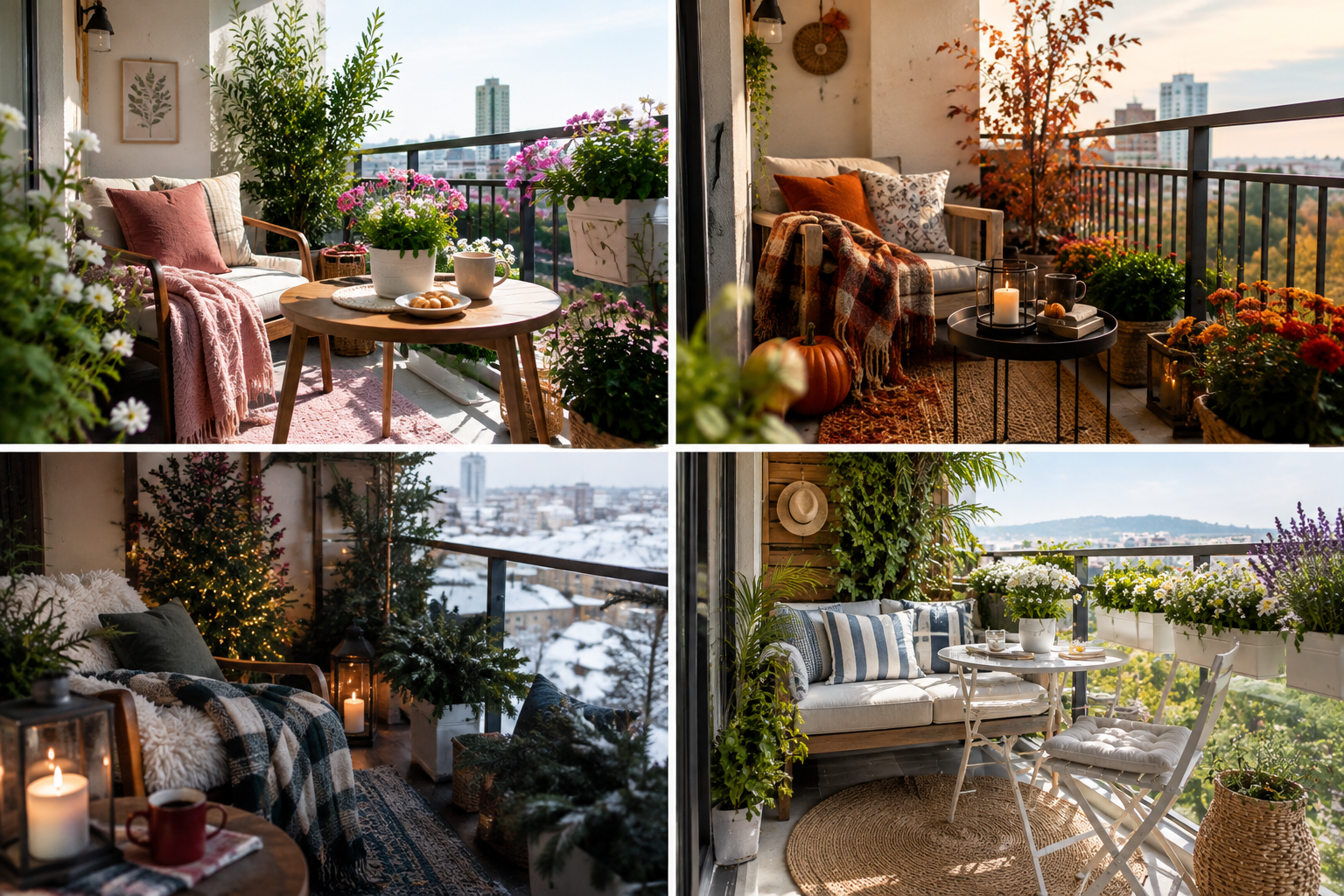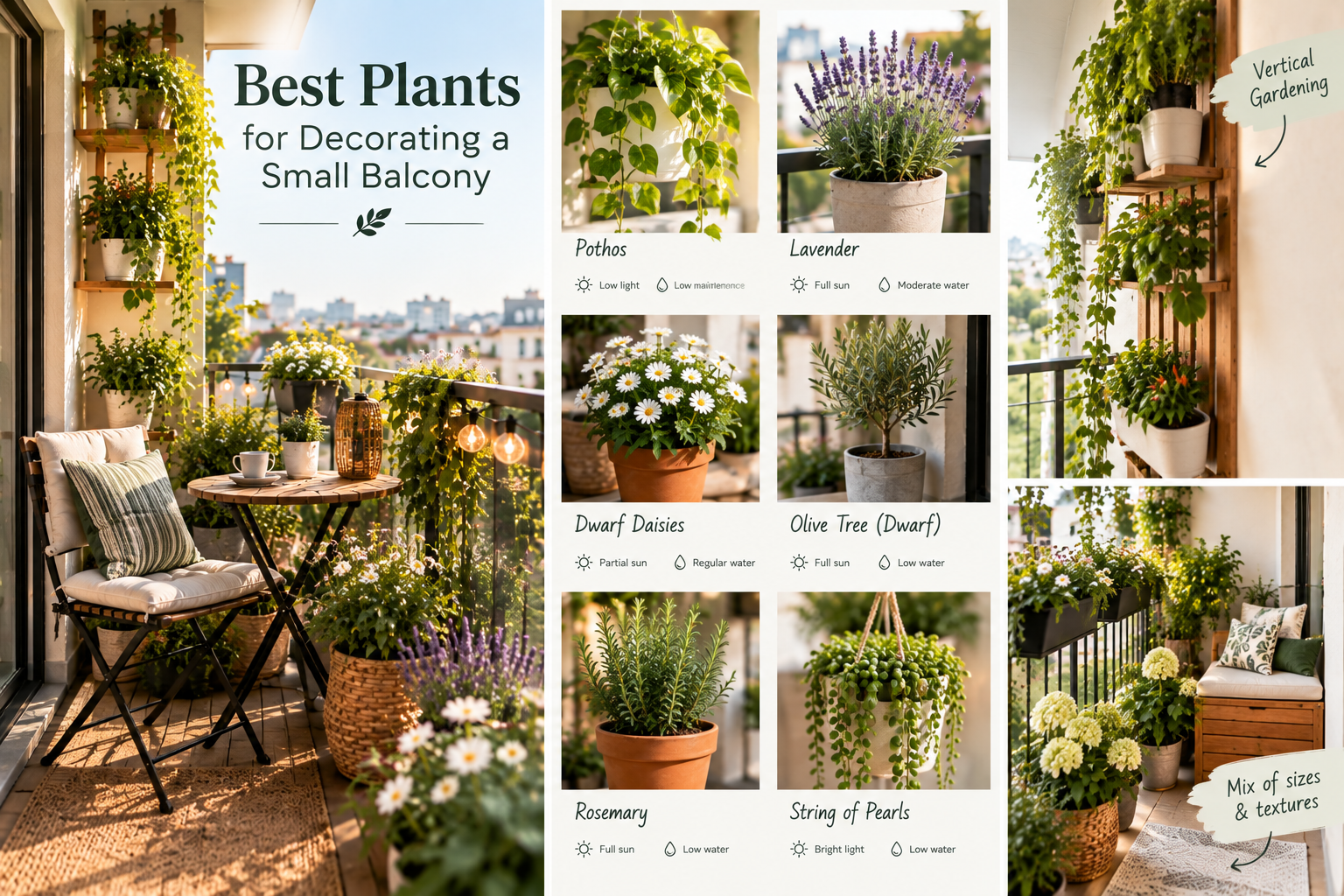
Urban micro-outdoor environments demand a rigorous design strategy that treats limited square footage not as a restriction, but as an opportunity for curated botanical integration. Selecting the best plants for decorating a small balcony requires a careful balance between biological survival and spatial proportion. When architectural constraints compress your perimeter, every container, vine, and perennial must earn its footprint by enhancing sightlines, softening harsh masonry, and generating acoustic dampening against city noise. A common pitfall in compact terrace design is overloading the floor plane, which disrupts circulation paths and creates visual clutter. Instead, successful balcony styling relies on vertical zoning, careful calibration of natural light patterns, and the intentional selection of foliage textures that interact dynamically with ambient sunlight and artificial illumination. By understanding how wind tunnels, thermal radiation from exterior walls, and seasonal shifts impact your microclimate, you can establish a thriving, highly sophisticated green retreat that extends your interior living space outward.
Architectural Foundations and Spatial Proportions
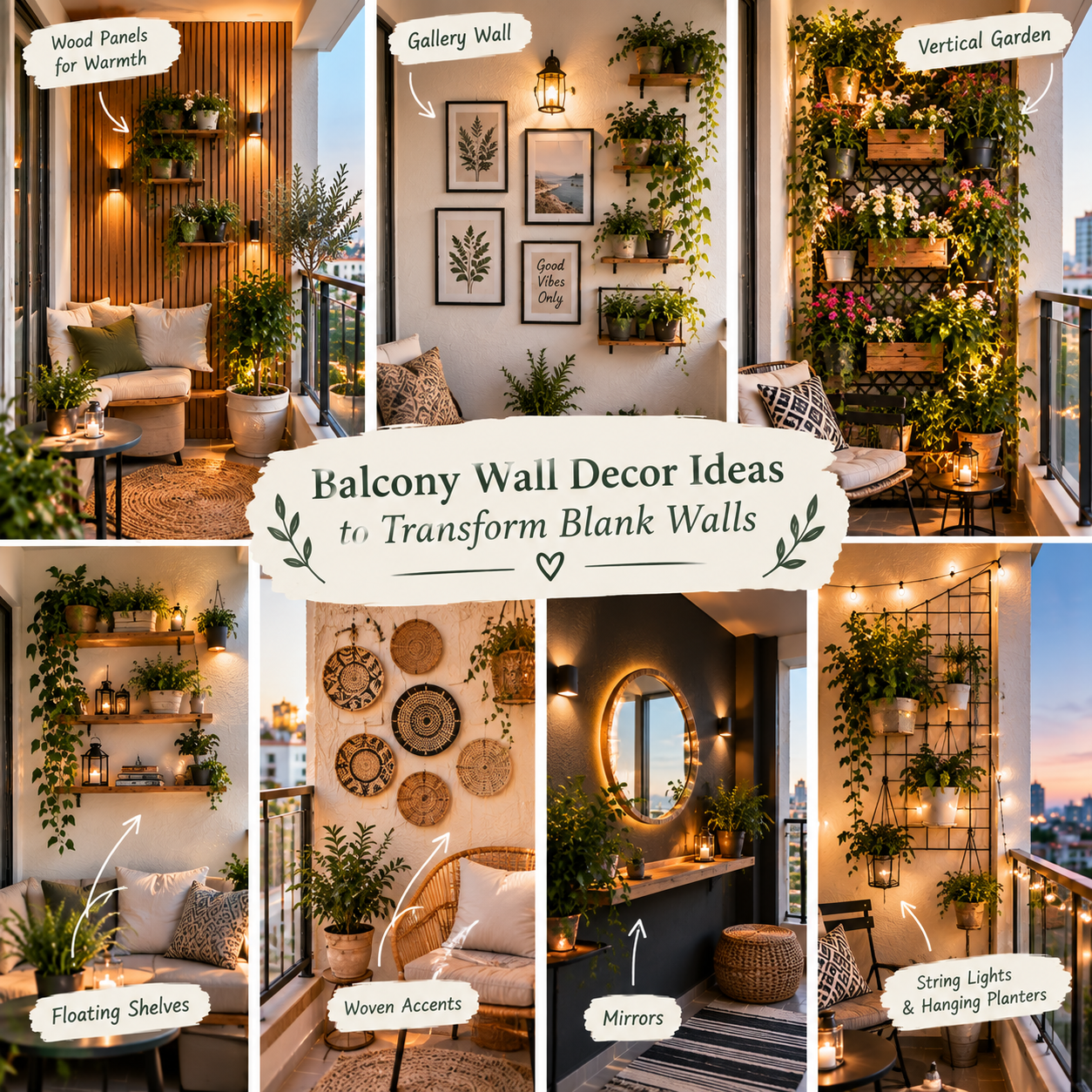
Before sourcing flora, analyze the structural limitations and structural load capacities of your cantilevered or recessed platform. Most residential balconies possess strict weight limits per square meter, meaning heavy terracotta pots filled with saturated soil must be balanced with lightweight composite fiberglass or acrylic containers. Spatial efficiency dictates that you utilize vertical planes to preserve floor circulation. Rilling brackets along exterior railings, suspending macrame or wire-basket planters from overhead overhangs, and mounting modular pocket gardens directly onto masonry walls free up valuable ground space for seating or architectural lighting fixtures.
Visual weight plays a critical role in balancing a small footprint. If you position heavy, oversized shrubs exclusively on one side of a narrow balcony, the composition tilts optically and physically. Distribute your focal anchors symmetrically or use asymmetrical layering to draw the eye diagonally across the space, creating an illusion of expansive depth. Incorporating negative space is equally vital; dense thickets can overwhelm a compact area, whereas specimens with fine textures, such as ornamental grasses or delicate ferns, allow light to filter through, preserving an airy, open atmosphere.
Microclimate Analysis and Light Behavior
Microclimates on elevated platforms often differ dramatically from ground-level gardens. Wind speeds accelerate significantly on higher floors, which desiccates foliage rapidly and destabilizes top-heavy planters. Selecting drought-tolerant species with wind-resistant stems prevents premature breakage and minimizes watering frequency. Furthermore, sun exposure dictates your plant palette:
- South-facing and west-facing balconies receive intense, direct solar radiation, requiring heat-tolerant succulents, Mediterranean herbs, and sun-loving perennials.
- North-facing balconies remain shaded for the majority of the day, demanding shade-tolerant woodland species that thrive in low-light conditions.
- East-facing spaces capture gentle morning sun coupled with afternoon protection, making them ideal for delicate flowering annuals and leafy tropicals.
- Wind-swept high-altitude ledges necessitate woody perennials and robust grasses with flexible culms that sway rather than snap.
Spatial warning: Never anchor heavy trellises or tall planters to weak vinyl siding or hollow exterior insulation systems without proper structural backing, as high-altitude wind loads can tear fixtures away from the wall surface.
Botanical Selection for Multi-Sensory Balcony Design
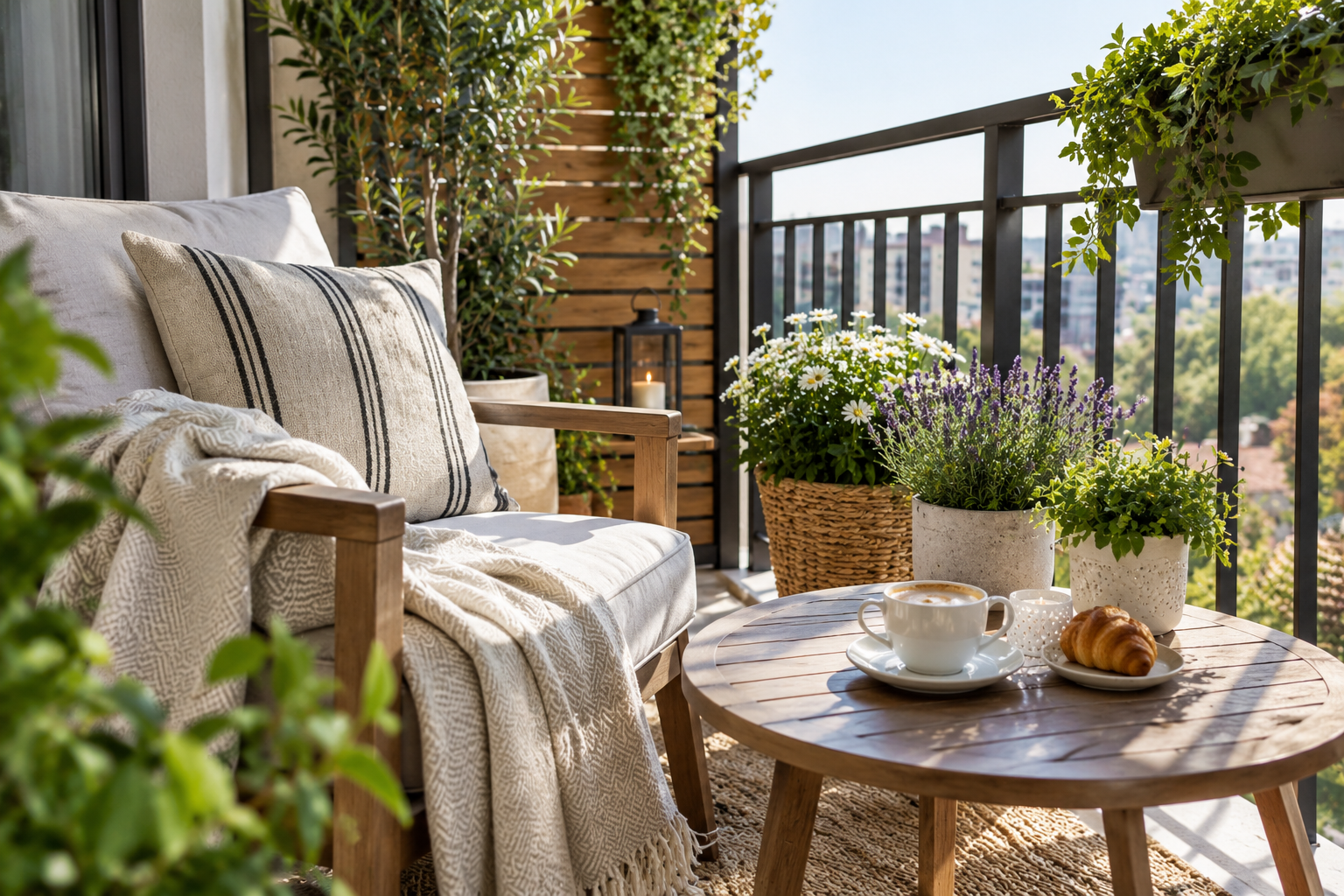
Curating the best plants for decorating a small balcony involves layering colors, scents, and structural forms to engage all the senses without overwhelming the perimeter. Contrast broad, glossy leaves with fine, needle-like foliage to generate visual tension and depth. For instance, pairing the architectural blades of New Zealand flax with the cascading, soft texture of creeping thyme establishes an immediate sense of professional landscape curation.
Vertical Climbers and Privacy Screens
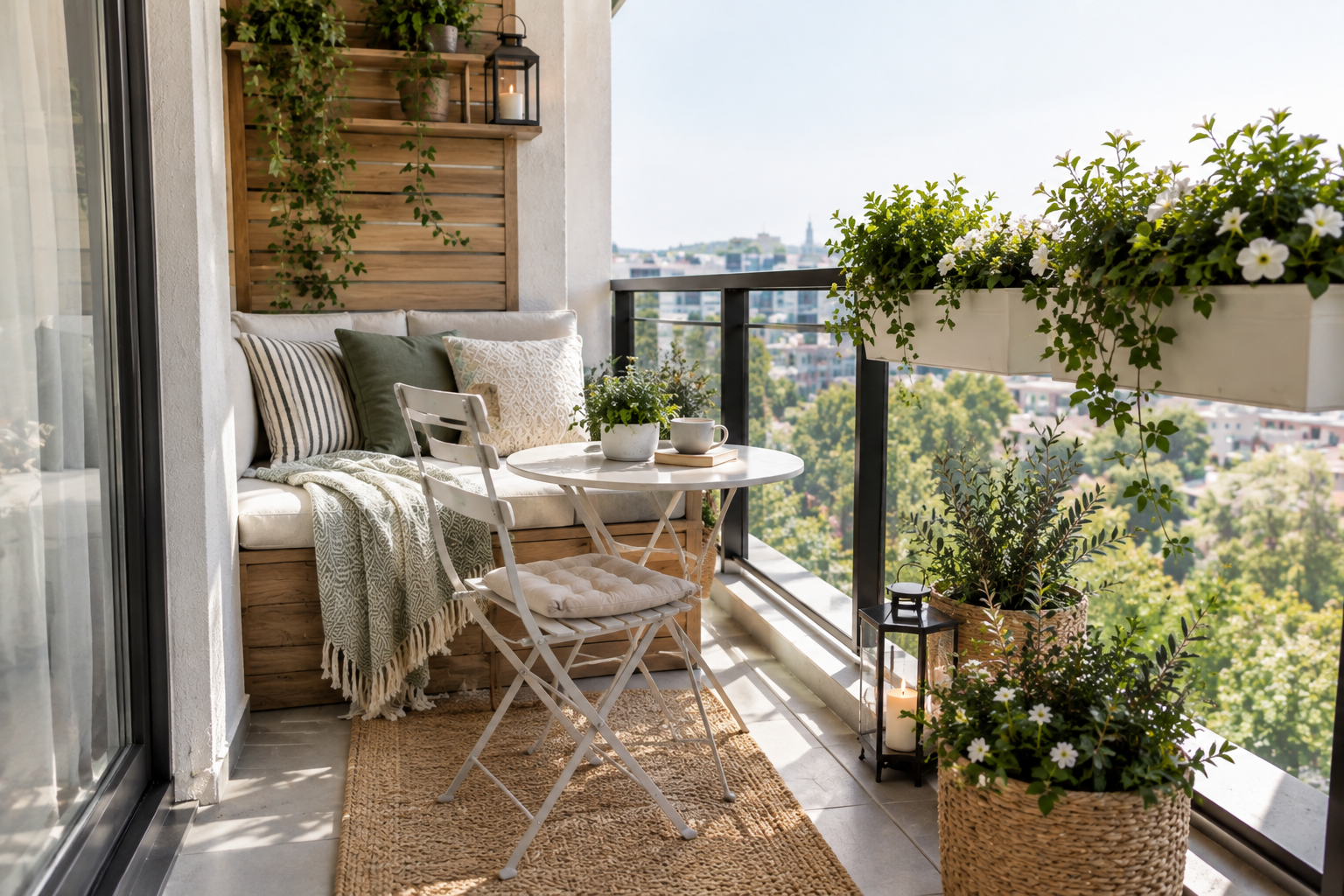
In dense urban settings, privacy from adjacent units is often a primary design objective. Rather than installing solid, light-blocking privacy screens, utilize living vegetative walls that double as natural acoustic barriers. Climbing vines soften hard metal railings and concrete slabs while introducing vertical momentum that lifts the viewer’s gaze upward.
- Star Jasmine offers evergreen foliage, high wind tolerance, and intensely fragrant white blossoms that perfume evening outdoor entertaining spaces.
- Clematis varieties provide spectacular seasonal color displays, though their root systems require shading by smaller companion plants or mulch layers to thrive in containers.
- English Ivy establishes dense, resilient green curtains, but requires regular pruning to prevent it from invading neighboring architectural joints.
- Passionflower introduces exotic, intricate blooms and fast-growing tendrils that quickly colonize narrow wire trellises.
Container Materiality and Aesthetic Cohesion
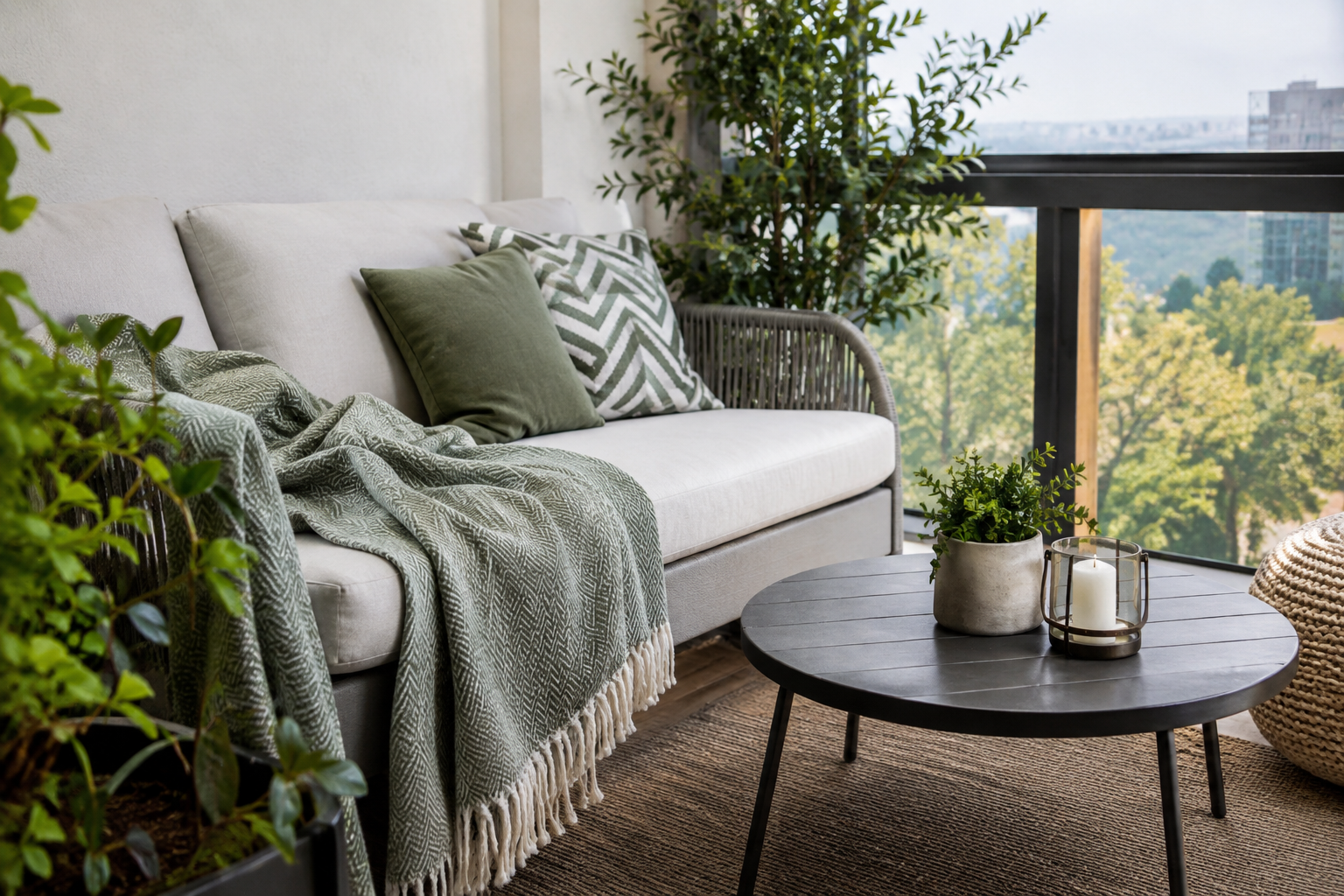
The pots and planters you select act as the structural framework for your botanical composition. Material selection must harmonize with the interior flooring that transitions onto the balcony, creating a seamless visual threshold. Avoid chaotic collections of mismatched plastic buckets; instead, adopt a disciplined color palette and material standard.
| Container Material | Weight Profile | Thermal Regulation | Best Architectural Application |
|---|---|---|---|
| Fiberglass Resin | Lightweight | Moderate | Modern, minimalist schemes requiring large profiles without excess weight |
| Terracotta | Heavy | Low (rapid evaporation) | Traditional or Mediterranean styles; ideal for drought-tolerant species |
| Galvanized Steel | Moderate | Poor (conducts extreme heat/cold) | Industrial or contemporary urban lofts; best used as outer cache-pots |
| Teak and Hardwood | Moderate | High (excellent insulation) | Warm, organic textures complementing natural wood decking |
Multi-Layered Illumination and Evening Ambiance
A sophisticated balcony design functions seamlessly across diurnal shifts. As daylight fades, your botanical selections must transform through strategic lighting placement. Avoid harsh overhead glare; instead, build a multi-layered illumination scheme incorporating ambient, task, and accent lighting.
Position subtle, low-voltage LED uplights at the base of architectural plants like dwarf olive trees or upright architectural grasses to cast dramatic, dancing shadows against the exterior building wall. Integrate warm-toned string lights along railing perimeters or conceal linear tape lighting within built-in bench seating to illuminate pathways safely. Backlighting dense foliage creates a luminous perimeter, visually pushing back the boundaries of a narrow balcony and transforming the glass door into a glowing picture frame looking out onto your private urban sanctuary.
Frequently Asked Questions About Best Plants for Decorating a Small Balcony
What are the best low-maintenance plants for a windy high-rise balcony?
High-rise balconies experience severe wind currents that strip moisture from foliage and threaten to tip over containers. The most reliable species for these rigorous conditions include ornamental grasses such as blue fescue and feather reed grass, hardy succulents like sedum and agave, and tough woody shrubs like dwarf conifers or rosemary. These plants feature flexible structures or low surface-area-to-volume ratios that resist wind damage while requiring minimal irrigation.
How do I water balcony plants efficiently without creating drainage messes?
Managing drainage on a balcony requires proactive planning to avoid water dripping onto neighbors below or staining your own flooring. Always select containers equipped with matching saucers or interior water-reservoir systems. For hanging baskets or railing planters, utilize self-watering inserts that draw moisture up from a base tank via capillary action, significantly reducing runoff. Additionally, applying a thick layer of organic mulch or decorative gravel to the soil surface prevents water from splashing out during heavy downpours.
Can I grow edible vegetables and herbs on a small apartment balcony?
Urban food production thrives on small balconies provided the space receives at least six hours of direct sunlight. Compact vegetable varieties, including cherry tomatoes, bush cucumbers, and dwarf bell peppers, adapt exceptionally well to container culture. Herbs such as basil, mint, thyme, rosemary, and oregano require minimal root depth and can be clustered together in tiered vertical planters or railing boxes for easy culinary access.
How do I protect balcony plants during harsh winter freezes?
Container-grown plants are far more vulnerable to root freeze than plants rooted in the ground because freezing air surrounds the pot on all sides. To protect perennials and evergreens during winter, cluster your containers tightly against the warmest exterior wall of the building to exploit radiant heat. Wrap delicate pots in burlap or bubble wrap for thermal insulation, and consider moving sensitive tropical specimens indoors or into a protected conservatory space before the first hard frost.
What soil mix should I use for potted plants on a balcony?
Standard garden soil is entirely unsuitable for balcony containers because it compacts easily, lacks adequate aeration, and introduces weed seeds or pathogens. Instead, use a high-quality, lightweight potting mix formulated with peat moss, coconut coir, perlite, and vermiculite. This specialized blend retains essential moisture while maintaining rapid drainage pathways and preventing the soil mass from becoming excessively heavy for your balcony’s structural load limits.