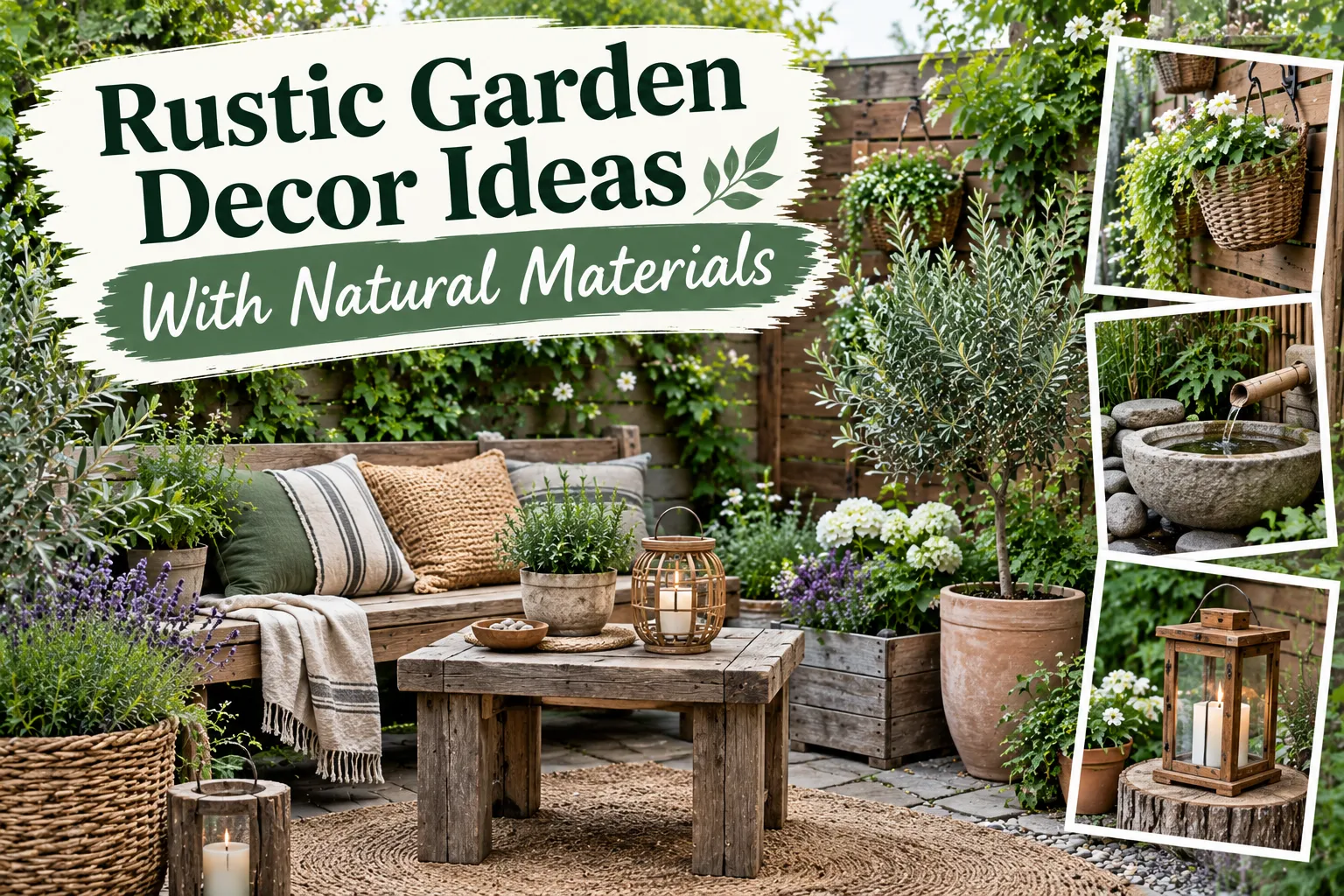
Transforming an exterior landscape from a mere plot of land into a deeply grounding architectural sanctuary requires moving away from manufactured perfection and embracing the authentic imperfections of the earth. When approaching rustic garden decor ideas with natural materials, the primary design challenge lies in avoiding a chaotic, cluttered aesthetic while honoring the raw, unrefined qualities of stone, timber, unglazed ceramics, and weathered metals. Exterior spaces often suffer from visual flatness, particularly when hardscaping relies entirely on uniform concrete pavers or synthetic decking that refuses to age with grace. To counteract this sterility, professional landscape designers must manipulate sightlines, balance the heavy visual weight of monolithic elements, and choreograph light to interact dynamically with porous surfaces. By introducing materials that acquire a rich patina over time, the garden transitions from a static backdrop into a living composition that shifts subtly with the seasons, responding directly to moisture, sunlight, and organic growth.
Spatial constraints and microclimates dictate how rustic elements perform over extended durations. A shaded north-facing courtyard requires different material selections than an exposed southern terrace subject to intense ultraviolet radiation and thermal shock. Integrating natural elements demands an understanding of scale and negative space. A massive dry-stacked limestone retaining wall can easily overwhelm a compact urban patch, whereas a delicate grouping of weathered fieldstone planters or a slender coppiced hazel fence maintains breathing room while introducing essential texture. The goal is to establish a cohesive dialogue between the built environment and the surrounding flora, ensuring that every decorative intervention feels rooted in the landscape rather than merely dropped onto it.
Establishing Foundational Spatial Anchor Points
Every successful outdoor room requires a primary visual anchor that commands attention without disrupting the natural flow of the garden. Establishing these focal points involves strategic placement of oversized architectural elements crafted from raw, unsealed materials that anchor the composition against the changing canopy of trees and shrubs.
Selecting Monolithic Stone Features
Natural stone serves as the backbone of rustic garden design. Selecting boulders, erratic rocks, or carved stone troughs requires evaluating their geological composition and color undertones. Cool-toned gray granites and schists demand warm planting palettes featuring bronze foliage and golden grasses, whereas warm sandstone and travertine boulders harmonize with silver-leafed artemisia and cool green ferns.
- Position large boulders at natural grade changes to anchor retaining edges and prevent soil erosion.
- Incorporate hollowed stone water basins to invite local fauna while introducing the calming acoustics of trickling water.
- Avoid placing stones in symmetrical grids; instead, cluster them in odd-numbered groupings that mimic natural glacial deposits.
Designing Timber Frameworks and Pergolas
Wood is essential for vertical dimension and overhead architectural interest. Utilizing rough-sawn cedar, reclaimed chestnut, or round-pole juniper creates a rustic framework that eventually silvers under weathering. Joints should be secured with exposed galvanized hardware or traditional mortise and tenon joinery to highlight structural honesty.
- Calculate vertical clearances carefully, ensuring overhead beams sit at least eight feet above finished grade to maintain comfortable proportions.
- Treat foundational timber posts with non-toxic borate solutions to deter subterranean insects without leaching harmful chemicals into adjacent garden beds.
- Train deciduous climbers such as autumn-flowering clematis or native wisteria over the structure to filter harsh midday sunlight during peak summer months.
- Lay irregular flagstone slabs over a compacted base of crushed aggregate and sharp sand, eliminating the need for rigid concrete mortar joints.
- Plant low-growing, traffic-tolerant ground covers such as creeping thyme or Roman chamomile between stone joints to release fragrant herbal oils when stepped upon.
- Incorporate wide-gauge timber rounds treated with natural oils for woodland paths, ensuring they are bedded securely to prevent wobbling.
- Align the primary garden gate with a strong interior sightline to draw the eye outward and expand perceived spatial boundaries.
- Frame the entrance with matching weathered stone pedestals topped with artisanal ceramic vessels planted with architectural succulents.
- Ensure swing gates have adequate clearance over shifting seasonal mulch beds and perennial growth.
- Tuck low-voltage LED uplights beneath the root flares of mature trees to illuminate canopy architecture and trunk texture.
- Integrate warm-spectrum linear strip lighting beneath the lips of timber benches or floating stone steps for safety and dramatic effect.
- Suspend hand-forged iron lanterns housing warm LED Edison bulbs from sturdy overhead pergola beams to create intimate dining pools of light.
Tactile Layering and Material Compatibility
A successful rustic garden avoids monochromatic monotony by layering diverse tactile surfaces that invite physical touch. The juxtaposition of rough-hewn timbers against smooth river stones or rusted iron creates a sophisticated sensory experience. Designers must curate material palettes carefully, balancing hard, reflective surfaces with absorbent, matte textures.
| Material Category | Primary Aesthetic Attribute | Durability Factor | Ideal Application |
|---|---|---|---|
| Reclaimed Barn Wood | Deep grain, original saw marks, silver-gray patina | Moderate; requires elevated placement away from standing moisture | Raised bed retaining walls, garden gates, architectural screens |
| Dry-Stacked Fieldstone | Zero mortar construction, excellent permeability | Exceptional; settles naturally with ground movement | Garden boundaries, terraced slopes, planting pockets |
| Corten Steel | Controlled rust finish, industrial warmth | High; forms a protective barrier against deeper corrosion | Edging strips, minimalist raised planters, fire features |
| Unglazed Terracotta | Porous earthenware, warm terra-rosa tones | Moderate; vulnerable to freeze-thaw cracking if saturated | Container gardening, focal urns, path borders |
Never seal rustic stone or reclaimed wood with glossy polyurethane or synthetic waterproofing agents. These products trap ambient moisture within the substrate, accelerate delamination through freeze-thaw cycles, and destroy the organic matte finish that defines authentic rustic design.
Circulation Paths and Threshold Transitions
Movement through a rustic garden should feel intuitive and unhurried. Pathways constructed from natural materials dictate the speed of travel and frame specific viewpoints across the landscape. Stepping stones cut from flagstone, embedded rounds of harvested logs, or paths surfaced with crushed oyster shells create distinct acoustic feedback underfoot, heightening sensory engagement with the space.
Designing Permeable Paving Systems
Maintaining ecological health within the garden requires permeable paving surfaces that allow rainwater to infiltrate directly into the water table rather than running off into municipal storm drains.
Crafting Inviting Entrance Portals
The transition from the interior domestic space to the exterior garden sets psychological expectations. A rustic arbor draped with climbing roses or a heavy, hand-carved timber gate serves as a threshold that signals a shift in environment.
Atmospheric Illumination and Multi-Layered Lighting
Nighttime transforms the rustic garden into an entirely different spatial experience. Relying on a single, harsh floodlight destroys the subtle shadows and moody atmosphere inherent to natural materials. An expert lighting scheme utilizes multi-layered illumination comprising ambient, task, and accent lighting to reveal the deep fissures in bark, the crystalline structure of stone, and the gentle sway of ornamental grasses.
Concealing Fixtures Within Natural Elements
Lighting hardware should remain invisible during daylight hours, allowing the natural materials to take center stage.
Balancing color temperatures is paramount when illuminating rustic materials. Warm color outputs ranging from 2200K to 2700K enhance the golden hues of timber and the earthy tones of clay and stone, whereas cool white fixtures impart an unnatural, industrial cast that clashes with organic aesthetics.
Frequently Asked Questions About Rustic Garden Decor Ideas With Natural Materials
How do I protect outdoor timber from rotting without ruining the rustic look?
Preserving rustic timber requires treatments that penetrate the wood fibers rather than forming a plastic film on the surface. Natural drying oils such as boiled linseed oil, tung oil, or specialized formulations containing pine tar provide excellent moisture resistance while allowing the wood to breathe and age naturally. To maximize longevity, ensure timber elements never touch bare soil directly; instead, mount posts on concealed galvanized steel brackets or set them upon crushed gravel drainage beds to facilitate rapid drying after rain events.
What are the best plants to pair with heavy stone and weathered wood decor?
The most effective plantings for rustic gardens offer contrasting textures that soften hard architectural lines. Feathery ornamental grasses such as stipa tenuissima, upright structural perennials like verbena bonariensis, and cascading ground covers like creeping juniper create a dynamic interplay between soft and hard elements. Selecting plants with muted, desaturated foliage colors, including silver, blue-gray, and deep burgundy, ensures the planting palette complements the earthy undertones of natural stone and aged timber rather than competing with them.
Can rustic garden decor work within a small urban courtyard or balcony?
Rustic design principles scale down successfully to confined urban environments through careful curation and editing. Instead of massive boulders, utilize compact weathered stone troughs or lightweight fiberglass planters finished with a convincing stone-dust coating. Focus on vertical surfaces by mounting reclaimed wood trellises or creating a single living wall framed in raw cedar. Limiting the material palette to just two or three cohesive natural elements prevents visual clutter and maintains a serene, uncluttered atmosphere in compact spaces.
How can I incorporate rusted metal elements without making the garden look neglected?
The key to successfully integrating rusted metal, such as Corten steel or weathered cast iron, lies in intentional framing and deliberate contrast. Rusted elements should appear as structural components or purposeful art pieces rather than discarded debris. Pair rusted steel edging or planter boxes with crisp, architectural plantings like boxwood spheres or neatly raked gravel paths to provide a clean boundary that signals human care. Furthermore, pre-weathered Corten steel forms a stable iron-oxide coating that arrests further structural corrosion, ensuring high durability alongside its striking organic color.
Executing rustic garden decor ideas with natural materials requires patience, a discerning eye for scale, and a deep respect for how organic substances interact with weather over time. By prioritizing tactile authenticity, sustainable drainage, and integrated lighting, you cultivate an outdoor environment that feels timeless, grounded, and intrinsically connected to the natural world.