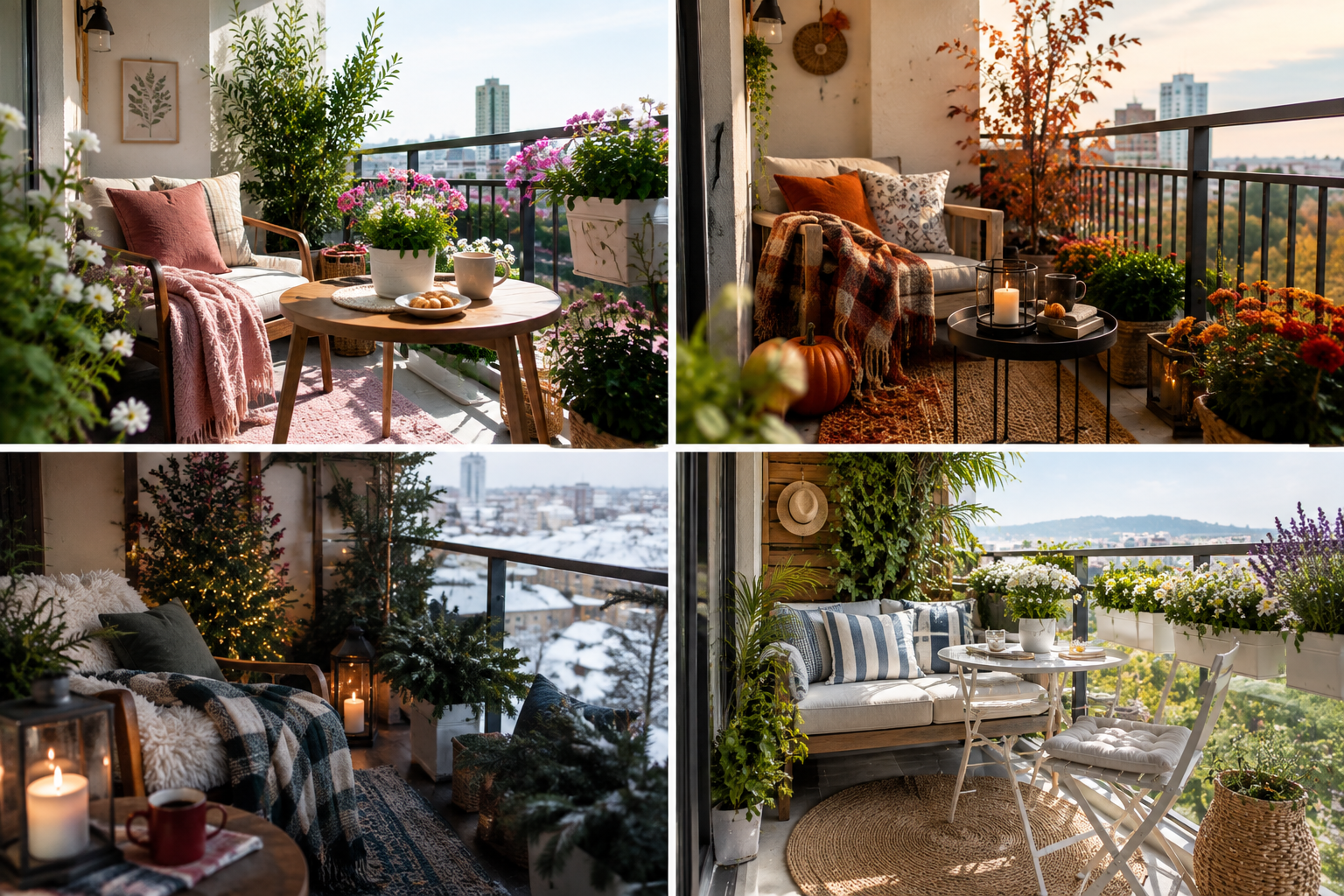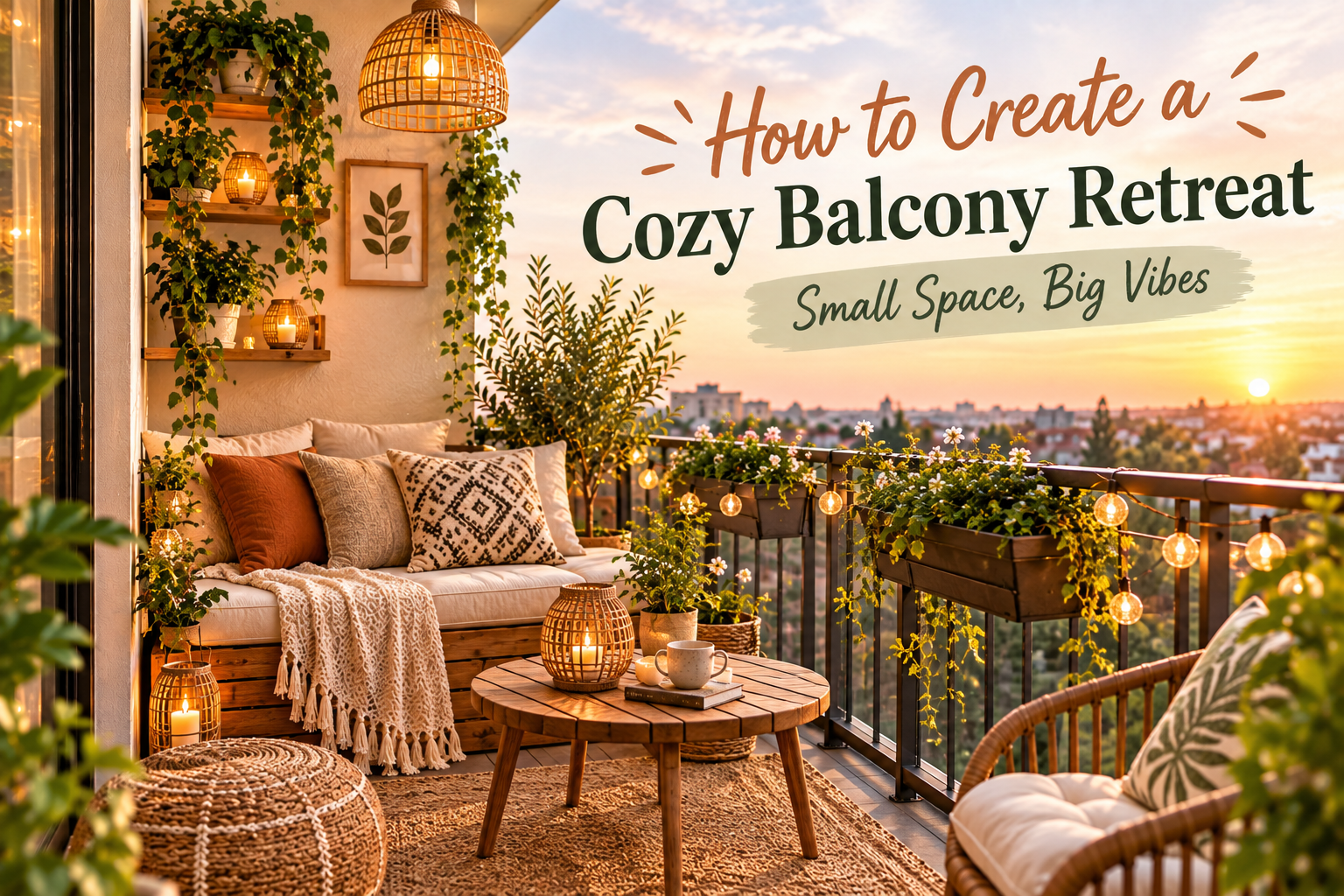
Transforming a compact outdoor footprint into an intentional sanctuary begins with understanding how morning light interacts with architectural boundaries. Urban apartments and suburban townhomes often present awkward proportions, narrow guardrails, and abrasive wind currents that discourage daily use. When evaluating balcony decor ideas for morning coffee and relaxing, the primary design challenge centers on maximizing spatial utility while softening hard structural elements like concrete slabs, aluminum railings, and glaring stucco walls. By treating the balcony as a true extension of the interior living space, a cohesive design strategy introduces tactical furniture sizing, tactile material pairings, and layered illumination. This approach eliminates the feeling of a neglected utility zone, replacing it with an atmospheric micro-climate tailored for quiet dawn rituals and restorative evening unwinding. Success relies on balancing visual weight, ensuring safe circulation paths, and selecting elements that weather environmental exposure without sacrificing sensory appeal.
Architectural Foundations and Spatial Proportions
Spatial planning for compact outdoor zones requires rigorous adherence to scale. Oversized furniture instantly overwhelms limited square footage, destroying necessary negative space and blocking natural sightlines from the interior living room. Designing an ergonomic coffee station or lounging corner demands careful measurement of swing clearances, doorway thresholds, and guardrail heights.
Establishing Circulation Paths and Focal Anchors
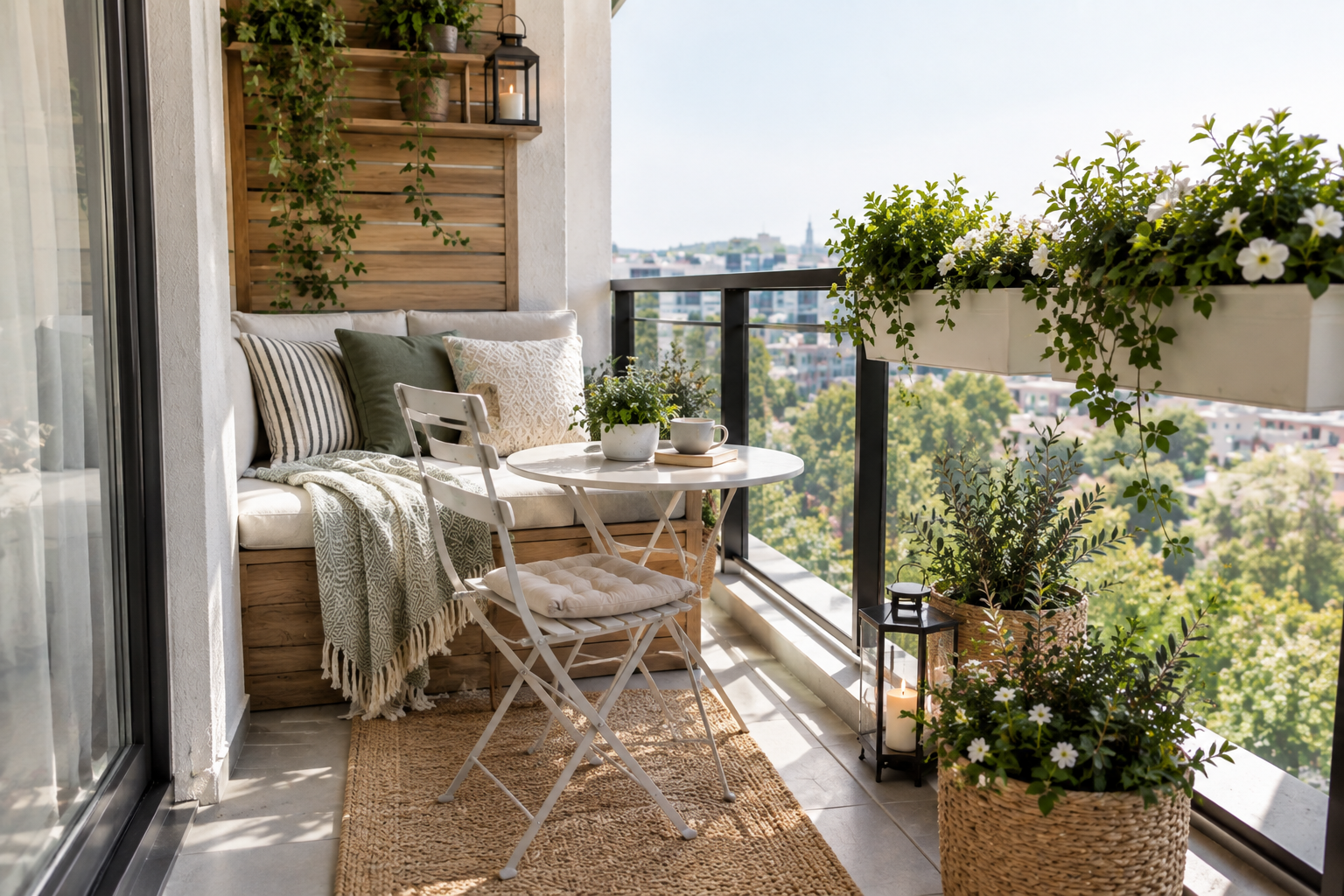
Every successful layout relies on a clear focal anchor. On a narrow linear balcony, positioning a low-profile bistro set at one terminal end keeps the central corridor open, allowing uninterrupted movement and preserving the connection to the view beyond. Visual weight must be distributed evenly across the perimeter. If heavy planters occupy the left corner, balance them with a vertical wall trellis or a slim storage bench on the right. This prevents the spatial composition from feeling lopsided and maintains architectural harmony.
Material Selection for Climate Resilience and Aesthetics
Outdoor surfaces endure extreme thermal fluctuations, UV radiation, and moisture accumulation. Material integrity dictates the longevity and patina of the design. Metals must feature powder-coated finishes to resist rust, while woods require dense grain structures and regular oiling to prevent splintering and warping. The tactile interplay between rough masonry and smooth textiles grounds the design.
| Material Category | Ideal Application | Durability Rating | Maintenance Protocol |
|---|---|---|---|
| Teak | Dining tables and seating frames | High | Annual sanding and UV-inhibiting sealant application |
| Powder-Coated Aluminum | Lightweight frames and plant stands | Exceptional | Periodic rinsing with mild soap and water |
| Synthetic Rattan | Woven lounge chairs and storage bins | High | Seasonal washing and avoidance of abrasive brushes |
| Porcelain Tile | Floating deck systems and flooring | Exceptional | Standard sweeping and occasional alkaline cleaning |
Curating the Morning Coffee Experience
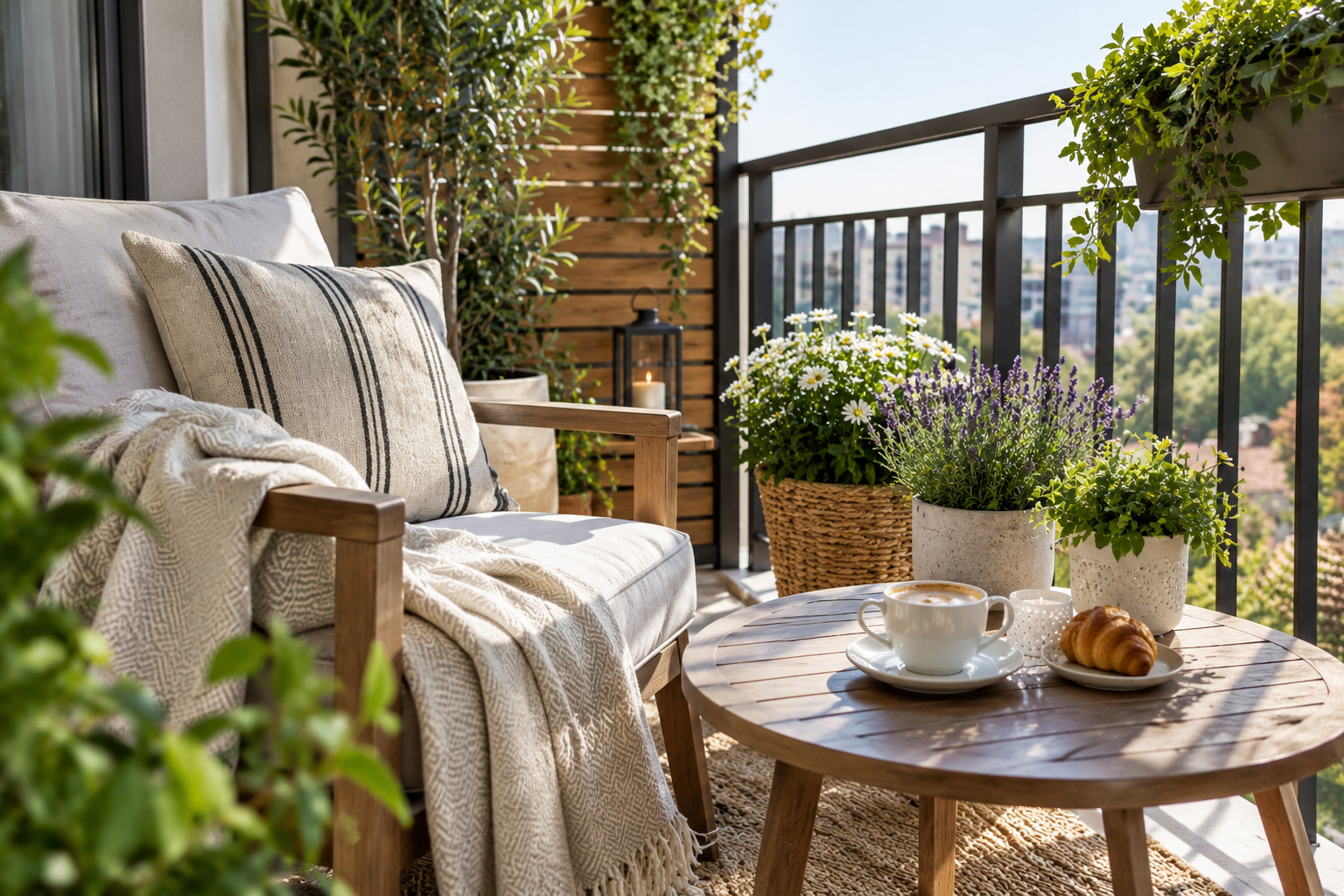
The dawn ritual demands absolute functional efficiency combined with sensory comfort. The coffee setup should feel deliberate, eliminating the need to constantly shuttle items back and forth from the indoor kitchen. Scale is critical here. A drop-leaf wall-mounted table preserves precious floor space while providing a stable surface for a ceramic pour-over set, a vintage brass kettle, and a morning journal.
Never rely on a single central light source for an outdoor morning nook. True comfort requires a multi-tiered lighting strategy that transitions seamlessly from the dark hours of early dawn to the harsh glare of midday sun.
Ergonomics dictate seat height relative to table surfaces. Standard dining chairs paired with a twenty-eight-inch table offer an upright, alert posture suited for reading the morning news. Conversely, deep-seated lounge chairs paired with a low coffee table encourage slouching and meditation, shifting the functional intent toward relaxation rather than active focus.
Textiles, Color Theory, and Acoustic Dampening
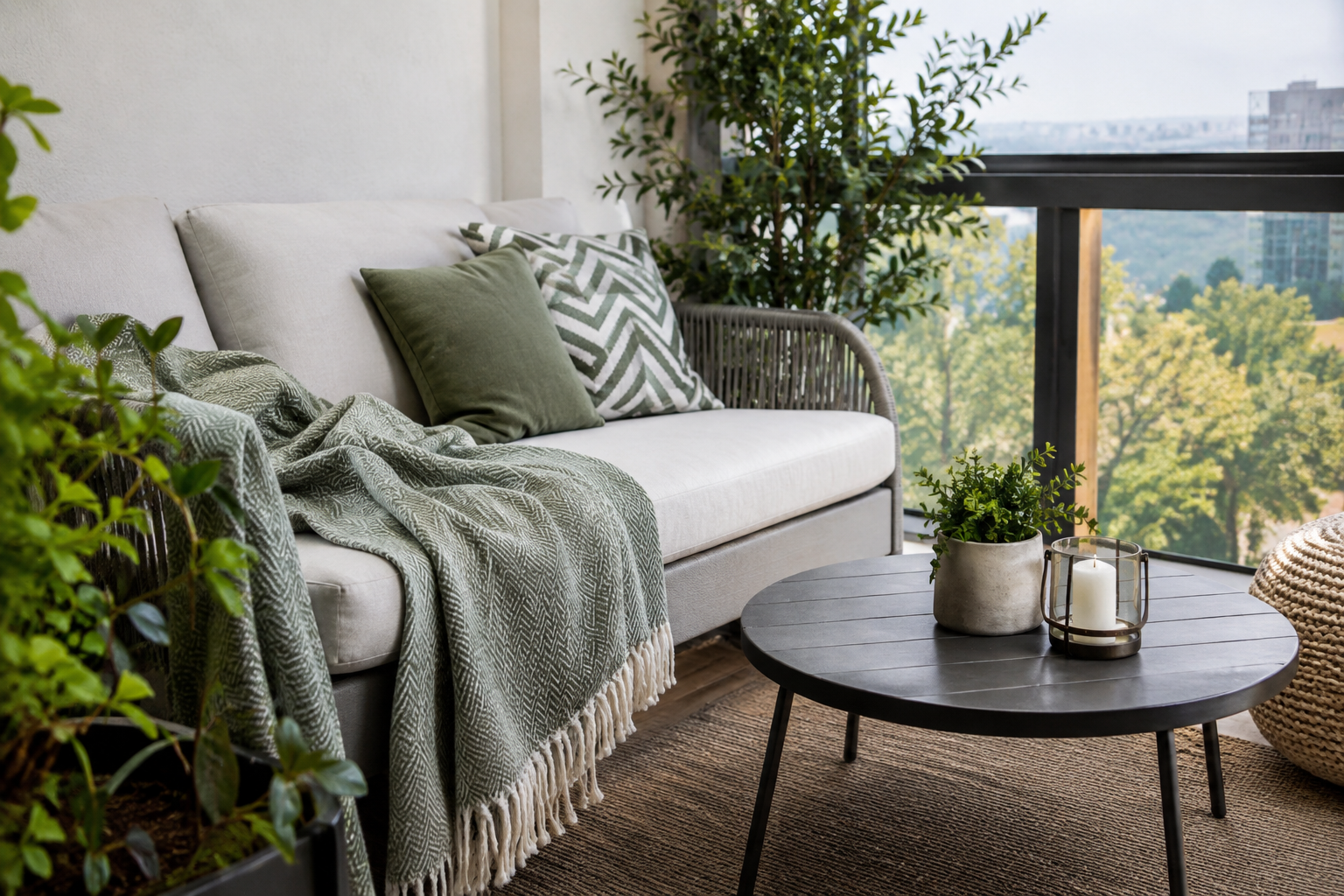
Hard architectural surfaces bounce sound waves, creating an echoey, sterile environment that impedes relaxation. Introducing soft textiles acts as an acoustic dampening system, absorbing urban noise and softening the hard edges of concrete and steel. Color palettes should draw inspiration from natural elements, utilizing muted earth tones, warm terracotta undertones, slate grays, and sandy neutrals to create a serene backdrop that does not compete with the natural sky and surrounding landscape.
- Layer outdoor rugs woven from recycled polyethylene terephthalate fibers to define the seating zone and insulate bare feet from cold concrete slabs.
- Incorporate weather-resistant throw pillows featuring contrasting textures like canvas, looped wool, and heavyweight linen to add visual depth.
- Install sheer, UV-resistant outdoor drapery panels along overhead pergolas or adjoining walls to filter harsh morning glare and provide windbreak capabilities.
The tactical arrangement of soft goods elevates a utilitarian balcony into a sophisticated room without walls. By paying close attention to tactile diversity, the space engages multiple senses simultaneously, grounding the user in the immediate environment.
Multi-Layered Illumination and Greenery Integration
Atmospheric lighting transforms a balcony from a daytime-only retreat into an evening sanctuary. Ambient illumination should be soft and diffused, avoiding harsh security glare. Solar-powered LED lanterns, rechargeable cordless table lamps with warm color temperatures, and subtle fairy lights woven through perimeter railings establish a gentle glow.
- Task Lighting: Focused directional sconces or clip-on lamps mounted near seating areas to illuminate reading material during early dawn hours.
- Accent Lighting: Up-lighting directed at structural planters or climbing vines to create dramatic architectural shadows against back walls.
- Ambient Lighting: Low-profile ground-level LED strips or pillar candles encased in hurricane glass to foster intimacy.
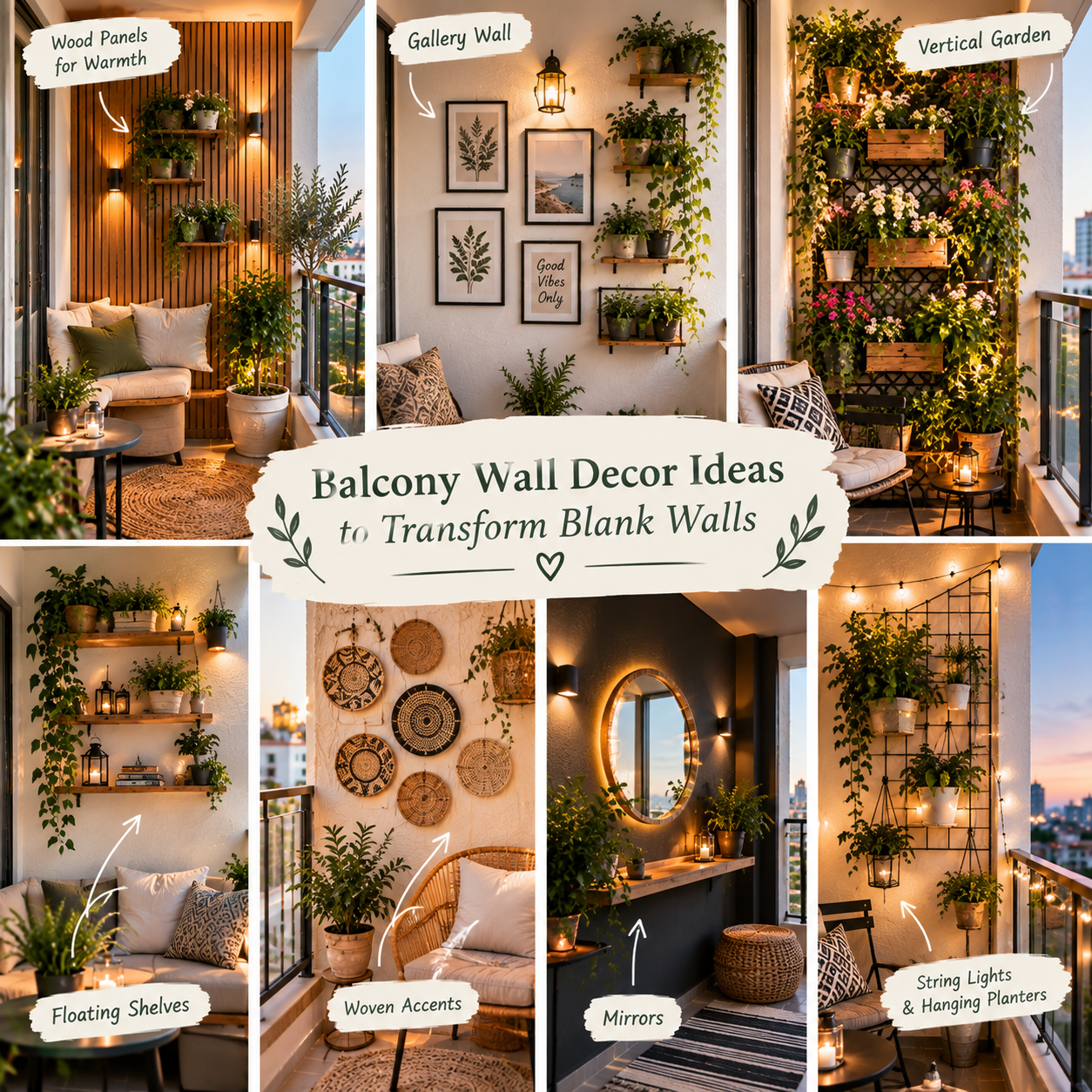
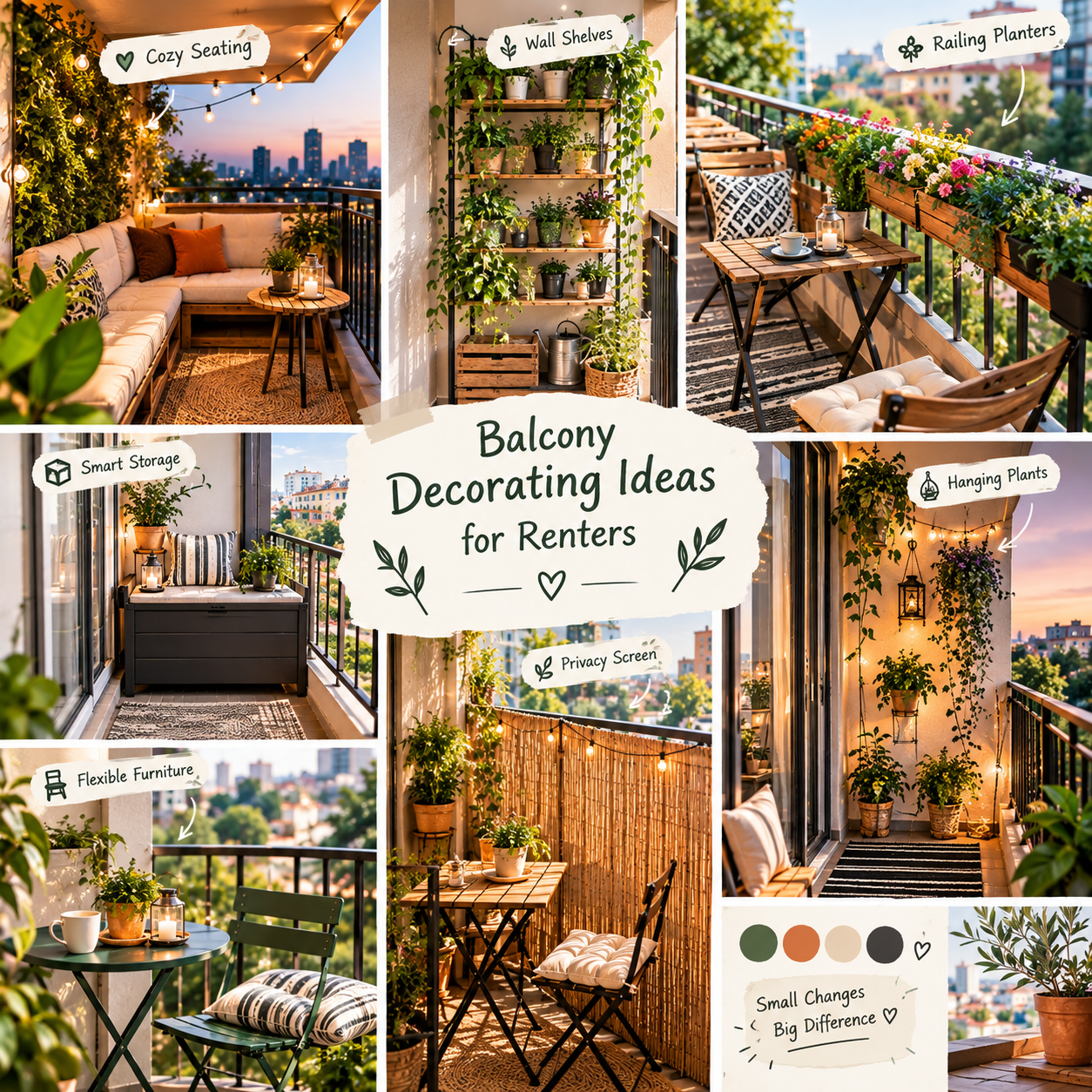
Botanical integration completes the outdoor transformation. Vertical gardening techniques, such as railing-mounted trough planters and hanging macrame holders, free up valuable floor space while surrounding the seating area with lush foliage. Selecting fragrant herbs like rosemary, lavender, and mint adds an olfactory dimension that enhances the morning coffee ritual, releasing essential oils when brushed against during movement.
Frequently Asked Questions About Balcony Decor Ideas for Morning Coffee and Relaxing
How do I protect my balcony furniture from harsh weather conditions?
Protecting outdoor furnishings requires a combination of preventative material choices and protective barriers. Always invest in custom-fitted, breathable, waterproof covers made from marine-grade canvas to shield pieces from prolonged rain, snow, and intense UV exposure. During the off-season or severe weather events, foldable furniture and lightweight textiles should be stored indoors in a temperature-controlled environment to prevent moisture entrapment and material degradation.
What is the best way to arrange furniture on a very narrow balcony?
Narrow balconies require a linear layout strategy to maintain an unobstructed circulation path. Position slim-profile furniture against one long wall, utilizing wall-mounted folding tables and stools that tuck completely underneath when not in use. Avoid placing bulky items in the center of the floor. Instead, anchor the far end of the balcony with a vertical plant display or a slim lounge chair to create a destination point that draws the eye outward.
How can I create privacy on an urban balcony without blocking natural light?
Privacy can be achieved without sacrificing illumination by utilizing semi-translucent materials and strategic vertical planting. Install woven bamboo or reed screening along the lower half of guardrails, leaving the upper portion open for light passage. Alternatively, train climbing vines such as star jasmine or clematis up a lightweight wire trellis or use tall, slender ornamental grasses planted in linear troughs to create a living green screen that filters views from neighboring units.
What are the best plants for a morning coffee balcony?
The ideal plants for a morning coffee space combine visual beauty with pleasing aromas and low maintenance requirements. Aromatic herbs like lavender, rosemary, and lemon verbena release calming scents when brushed against in the morning breeze. Trailing plants such as English ivy or sweet potato vine soften hard railing lines, while dwarf citrus trees add architectural height, vibrant color, and fresh foliage that thrives in bright morning sunlight.
How do I manage wind issues on a high-rise balcony?
High-rise balconies often experience accelerated wind currents that disrupt comfortable seating and blow over lightweight decor items. Mitigate wind pressure by installing perforated privacy screens that diffuse airflow rather than acting as a solid wall, which creates turbulent backdrafts. Anchor all furniture using weighted bases, select heavier stone or terracotta planters over plastic alternatives, and secure textiles with weighted corners or industrial-grade fasteners.