Urban apartment living often requires a delicate balance between enjoying the open air and maintaining a sanctuary away from neighboring windows, busy streetscapes, and overhead sightlines. When looking for effective balcony privacy ideas for apartments, the primary objective is to construct visual barriers without compromising structural integrity, natural light permeability, or spatial flow. Architectural constraints such as strict leasing guidelines, load-bearing limitations on railings, and intense solar exposure demand a strategic approach to material selection and layout planning. Urban balconies frequently suffer from wind tunnels and harsh glare, meaning that screening solutions must perform double duty as environmental moderators. By balancing solid elements with porous textures, designers can curate outdoor zones that feel secluded yet breathable. The secret lies in manipulating negative space and establishing visual anchors that draw the eye inward, neutralizing the intrusiveness of the surrounding built environment. Every design intervention must respect the scale of the footprint, ensuring that circulation paths remain unobstructed and that furniture placement complements the newly established sightlines.
Spatial Proportions and Sightline Mapping
Before selecting screening materials or furniture profiles, a rigorous site analysis is essential. Urban balconies rarely exceed standard depths of four to six feet, creating tight perimeters where bulky additions quickly cause spatial fatigue. Mapping sightlines involves charting the exact angles from which neighboring units can view your outdoor floor plan. Lower-tier balconies require ground-level and mid-level screening to block pedestrian traffic and adjacent terraces, whereas top-floor spaces demand overhead architectural elements to combat downward gazing from upper stories.
Balancing Visual Weight and Structural Loads
Material density dictates how a balcony feels and performs. Heavy concrete planters or dense timber walls can easily overwhelm a cantilevered concrete slab if weight limits are ignored. Conversely, overly transparent materials fail to provide the psychological comfort of privacy. The most successful design schemes utilize layered translucency, combining structural rigidity with airy textiles or organic forms.
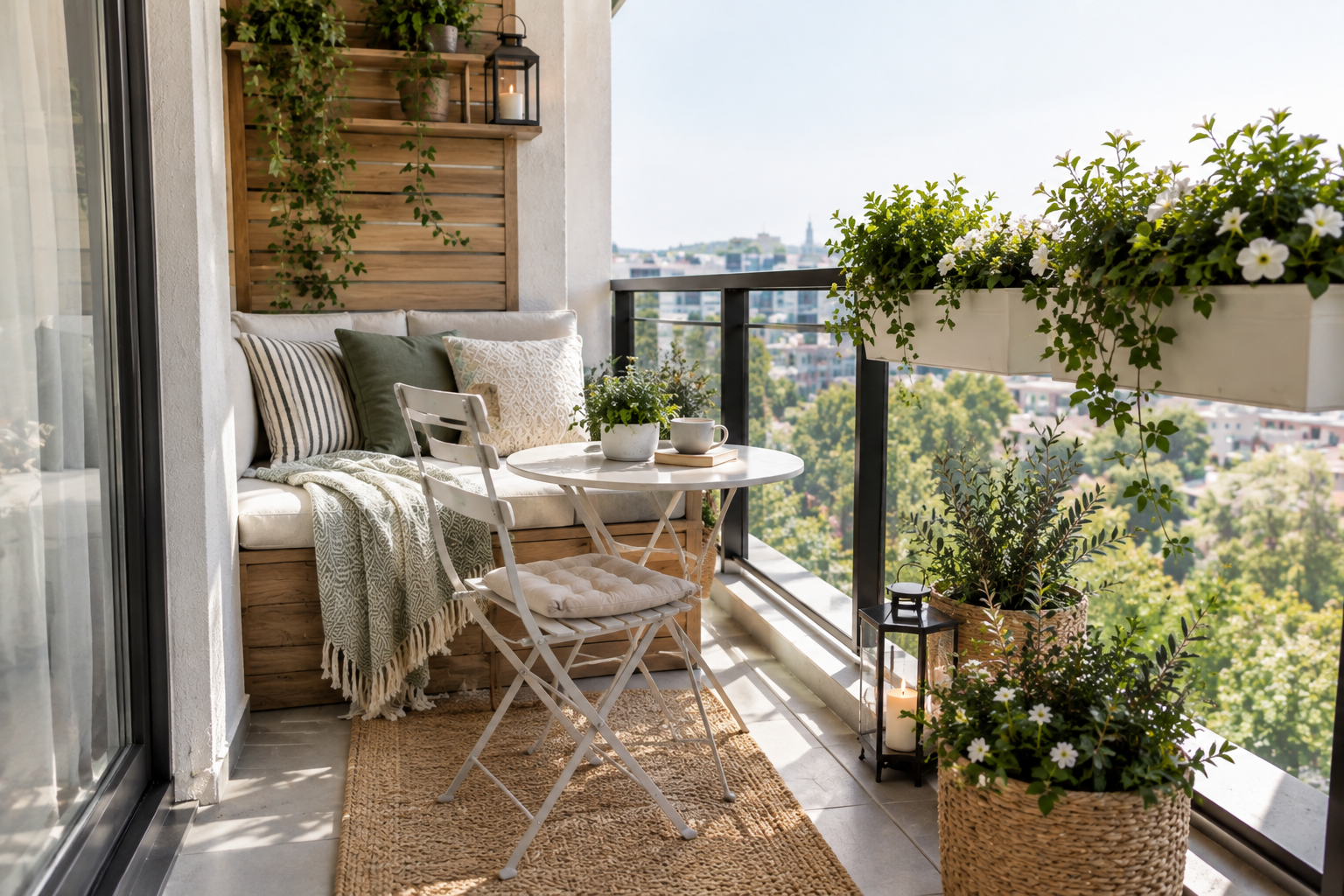
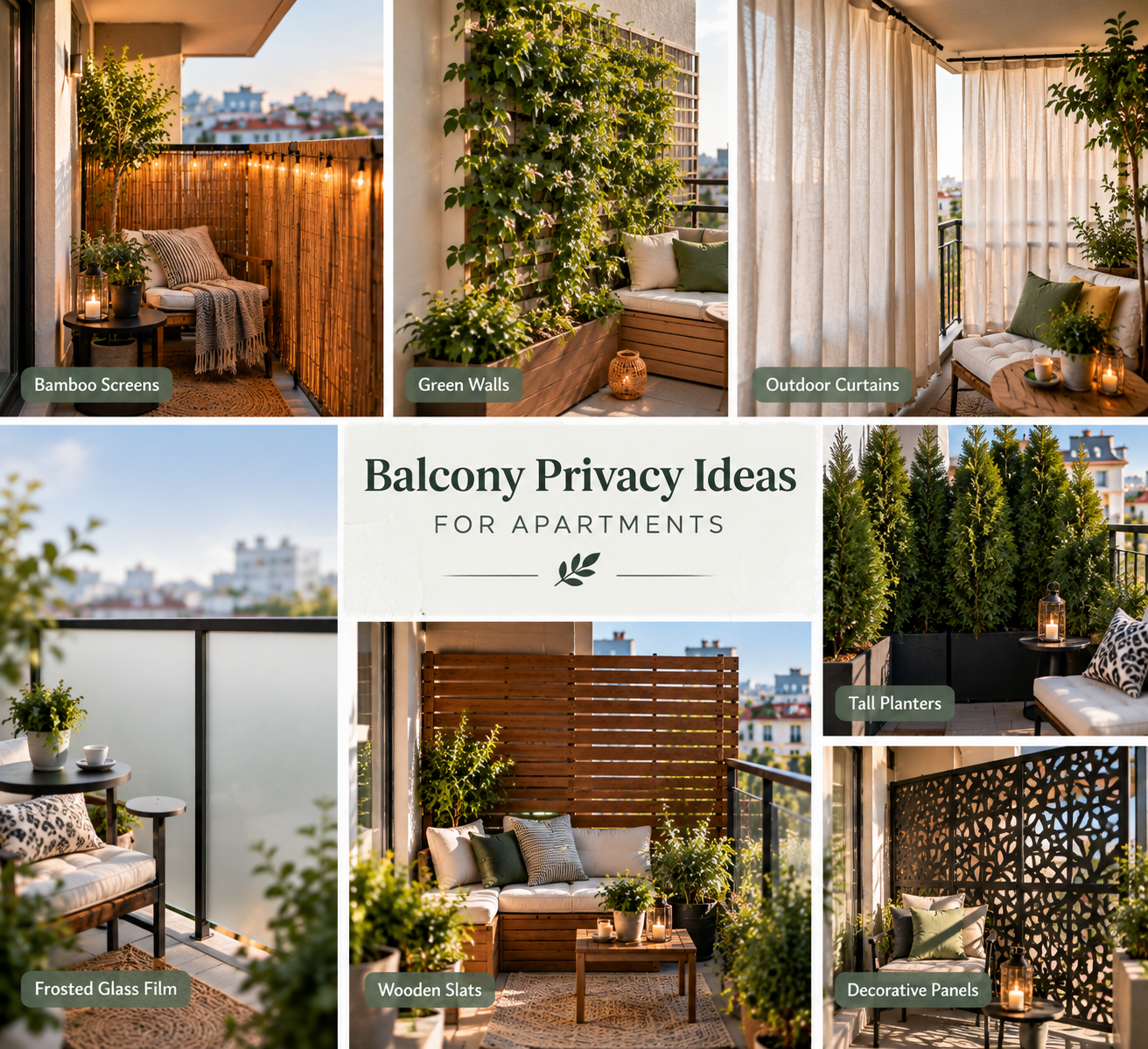
- Incorporate vertical timber slats spaced strategically to block direct sightlines at a forty-five-degree angle while allowing ambient light to penetrate.
- Install tension-mounted metal grilles that support climbing vines, merging organic foliage with industrial clean lines.
- Utilize frosted glass panels or laser-cut aluminum screens to diffuse harsh urban lighting and conceal underlying structural imperfections of older balcony railings.
- Position heavy focal elements near structural corners to stabilize the composition without cramping the primary circulation path.
- Select outdoor fabrics with high UV resistance and neutral undertones to soften hard architectural perimeters and reduce visual clatter.
Materiality, Patina, and Tactical Durability
Urban microclimates subject balcony materials to extreme thermal cycling, wind shear, and moisture retention. Choosing the right components requires an understanding of how surfaces weather over time. Untreated softwoods warp rapidly under fluctuating humidity, whereas powder-coated metals and marine-grade stainless steel maintain their structural integrity and finish for decades. When evaluating color undertones, opt for earthy, desaturated palettes that harmonize with the urban concrete jungle rather than competing with it.
Always verify local building codes and landlord regulations regarding balcony modifications. Never drill into exterior waterproof membranes or attach permanent structures to communal railings without prior engineering approval.
Tactile pairing is another critical consideration for sensory engagement. Combining the cool, industrial hardness of perforated steel with the warm, tactile grain of teak or Ipe wood generates immediate visual depth. Acoustic dampening is an often-overlooked benefit of proper material layering. Dense plantings, outdoor area rugs composed of recycled synthetic fibers, and upholstered seating absorb street noise, transforming an exposed concrete perch into a tranquil retreat.
| Material Type | Best Application | Durability Rating | Maintenance Level |
|---|---|---|---|
| Powder-Coated Aluminum | Laser-cut privacy screens and railing inserts | Exceptional | Low |
| Teak and Hardwoods | Slatted partition walls and modular decking | High | Moderate (annual oiling) |
| Synthetic Bamboo and Willow | Roll-out fence overlays and visual buffers | Moderate | High (seasonal replacement) |
| Acrylic and Polycarbonate | Windbreaks and light-diffusing panels | High | Low |
| Perennial Evergreen Shrubs | Living green walls and natural hedges | Variable | High (watering and pruning) |
Layered Illumination for Nighttime Seclusion
Privacy needs do not disappear when the sun sets. In fact, illuminated apartments often become exposed fishbowls at night if lighting design is neglected. Relying on a single overhead bulkhead fixture washes out the space and highlights every boundary. Instead, implement a multi-layered lighting strategy encompassing ambient, task, and accent illumination.
- Install low-voltage LED strip lighting underneath built-in bench seating or along the base of privacy screens to create a floating effect that expands perceived boundaries.
- Hang weather-resistant pendant lamps or wall sconces with warm color temperatures below 2700 Kelvin to establish an intimate, enclosed atmosphere.
- Incorporate directional uplighting at the base of tall ornamental grasses or architectural plants to cast dynamic, privacy-enhancing shadows against solid walls.
- Avoid glaring spotlights directed horizontally, which draw unwanted attention from neighboring units and cause light pollution.
- Utilize rechargeable, portable table lamps on side surfaces to provide localized task lighting for reading or dining without illuminating the entire perimeter.
Greenery and Botanical Screening Strategies
Integrating living plants into your spatial layout offers the most organic solution for apartment screening. Botanical elements provide variable seasonal textures, improve micro-air quality, and introduce natural acoustic baffles. However, container gardening on elevated slabs requires careful planning regarding drainage, wind resistance, and root system stability.
Selecting the Right Plant Species for Vertical Impact
Tall, narrow-growth plant varieties are optimal for narrow footprints. Instead of spreading wide, species such as columnar boxwoods, bamboo variants cultivated in containment boxes, and ornamental grasses like feather reed grass shoot straight up, creating natural living walls. Trellises mounted against solid balcony walls support climbing plants like star jasmine or clematis, which yield dense foliage screens that smell delightful and soften harsh masonry.
- Utilize lightweight fiberglass or composite resin planters instead of traditional terracotta to minimize dead load on the balcony structure.
- Implement automated drip irrigation systems to ensure consistent hydration without requiring messy hand-watering over the edge.
- Layer plants by height, placing taller specimens at the perimeter corners and shorter perennials near the interior threshold.
- Choose wind-tolerant species with flexible stems that sway gracefully rather than snapping during high-velocity urban gusts.
Frequently Asked Questions About Balcony Privacy Ideas for Apartments
How can I make my rental balcony private without drilling holes?
Renters can achieve comprehensive privacy by utilizing tension-rod systems, weighted base screens, and freestanding trellises that wedge securely between the floor and ceiling or railing. Zip ties, heavy-duty outdoor Velcro straps, and clamp-on umbrella mounts also allow you to attach bamboo rolls, fabric shades, or privacy panels directly to existing metal railings without causing permanent damage.
What are the best plants for blocking a neighbor view on a small balcony?
Columnar evergreens, such as Italian cypress or sky pencil holly, work exceptionally well because they grow vertically rather than horizontally, saving precious floor space. Bamboo grown in long rectangular planter boxes creates an instant living fence, while flowering vines like passionflower or star jasmine trained on a wire trellis provide dense seasonal coverage.
How do I block overhead sightlines from upper-floor apartments?
Overhead visibility requires vertical intervention above standard railing height. Installing a cantilevered patio umbrella, a retractable overhead sunshade, or hanging fabric sails provides immediate top-down protection. Alternatively, positioning tall potted plants on raised plant stands or building a partial overhead pergola frame with climbing vines effectively obscures views from above.
Are privacy screens safe for windy high-rise balconies?
Solid privacy screens act as sails on high-rise balconies, catching wind and transferring dangerous loads to the mounting points or railings. To maintain safety, use perforated metal panels, slatted wooden screens, or semi-transparent fabrics that allow air to pass through freely while still disrupting direct lines of sight.
What is the most cost-effective way to cover an ugly apartment railing?
Roll-out natural reed, willow, or split-bamboo fencing represents the most budget-friendly material option for masking unsightly metal or concrete railings. These materials attach easily with weather-resistant cable ties, instantly providing a warm, textured natural backdrop while filtering views from the street or neighboring courtyards.