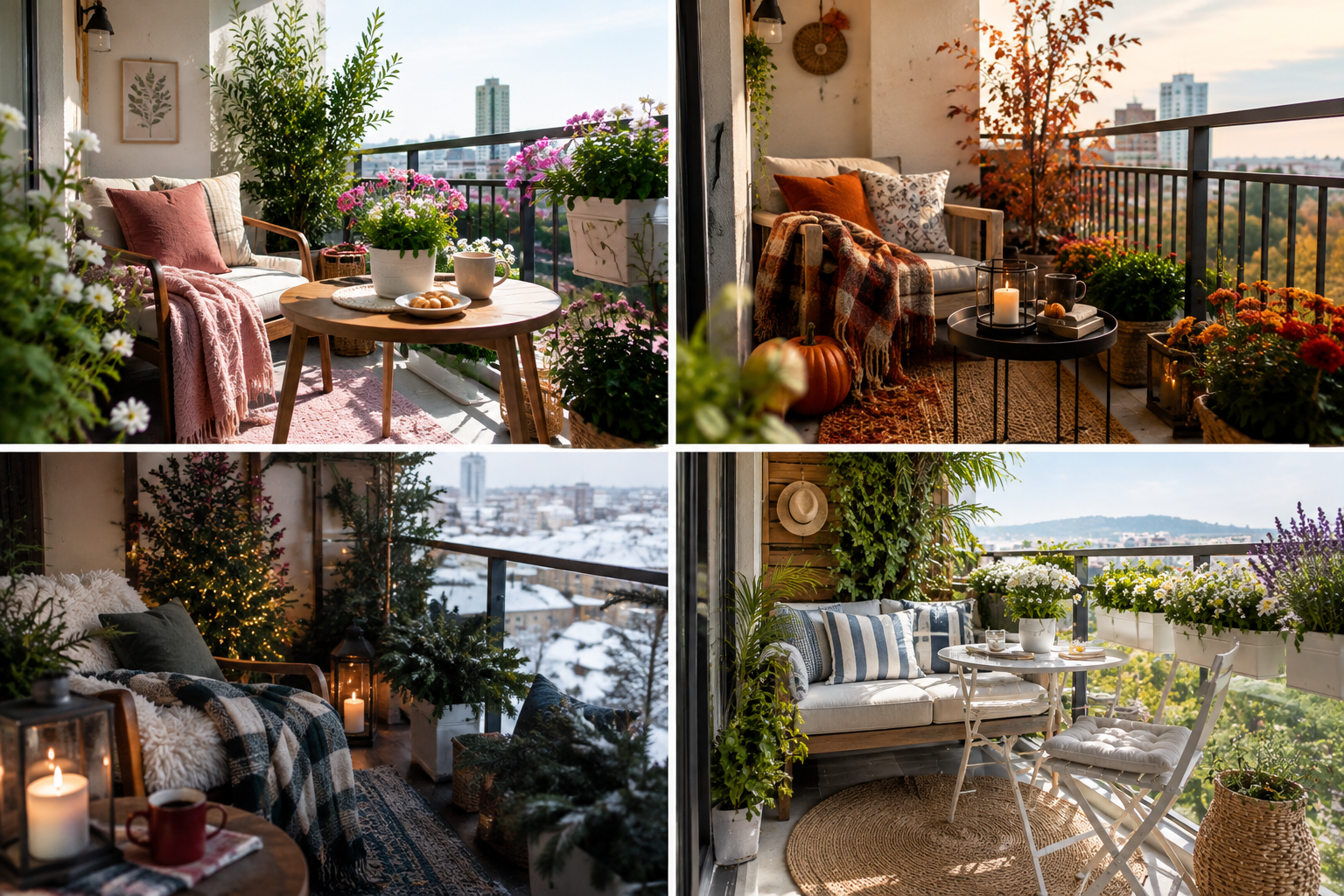
Urban apartment living frequently forces a compromise between private outdoor breathing room and the desire for lush, restorative greenery. When floor space is limited to a narrow strip of concrete or a shallow cantilevered platform, horizontal gardening quickly devours valuable circulation paths. Transforming this spatial limitation into an asset requires a shift in perspective away from the ground plane and toward the vertical envelope. Implementing vertical garden ideas for small balconies allows interior designers and homeowners to reclaim floor space while introducing vibrant botanical life, textural contrast, and acoustic dampening right outside the glass slider. Analyzing the structural mechanics of your balcony, understanding the behavior of microclimate wind currents, and selecting appropriate mounting systems transform an ordinary railing into a thriving living wall. Addressing architectural friction points such as load-bearing limits, water runoff, and harsh sun exposure ensures that your vertical landscape remains healthy and visually balanced across all four seasons.
Architectural Foundations and Spatial Mechanics
Designing a high-performing vertical garden on a compact balcony begins with an honest assessment of structural constraints and spatial proportions. Every square inch counts when you are working with a footprint measuring less than fifty square feet. Overloading a balcony wall with heavy, water-saturated soil media can compromise structural integrity, making lightweight modular systems, geotextile pockets, and self-watering troughs essential choices for urban retrofits. Circulation paths must remain unobstructed to maintain smooth transitions between the interior living space and the outdoor escape. A successful layout respects the natural sightlines from inside the home, using tall vertical elements to draw the eye upward and create an illusion of expanded ceiling height. Balancing negative space against dense foliage prevents the balcony from feeling claustrophobic or visually cluttered.
Microclimates and Sun Exposure Analysis
Balconies act as unique urban microclimates, often subject to amplified wind velocity, reflected heat from masonry walls, and extreme shifts in light exposure. South-facing balconies demand drought-tolerant succulents, ornamental grasses, and Mediterranean herbs capable of withstanding intense UV radiation and rapid soil dry-down. North-facing or deeply shaded balconies require shade-tolerant understory plants like ferns, hostas, and trailing ivies that thrive in lower light levels. Wind patterns on high-rise balconies can desiccate delicate foliage rapidly, making sturdy mounting hardware and wind-resistant plant selections non-negotiable elements of your installation strategy.
Material Selection and Durability Factors
Selecting materials that withstand weathering without losing their aesthetic appeal is crucial for long-term success. Untreated softwoods warp and rot quickly under constant moisture exposure, whereas powder-coated aluminum, marine-grade stainless steel, treated hardwoods like teak or ipe, and UV-stabilized high-density polyethylene provide exceptional longevity. The weight distribution of your chosen system must align with the engineering limits of your building facade. Installing a drainage channel or a hidden catchment tray prevents runoff from staining the concrete floor below or cascading onto your downstairs neighbor’s terrace.
| Material Type | Ideal Application | Durability Rating | Maintenance Requirements |
|---|---|---|---|
| Powder-Coated Aluminum | Wall-mounted grids and frames | Exceptional | Low – periodic cleaning with mild soap |
| Treated Teak and Ipe | Slatted screens and planter boxes | High | Medium – annual oiling to preserve tone |
| Geotextile Felt Pockets | Soft-sided modular living walls | Moderate | High – monitoring for root rot and salt buildup |
| High-Density Polyethylene | Self-watering cascading cassettes | High | Low – seasonal flushing of water reservoirs |
Styling Strategies and Visual Balance
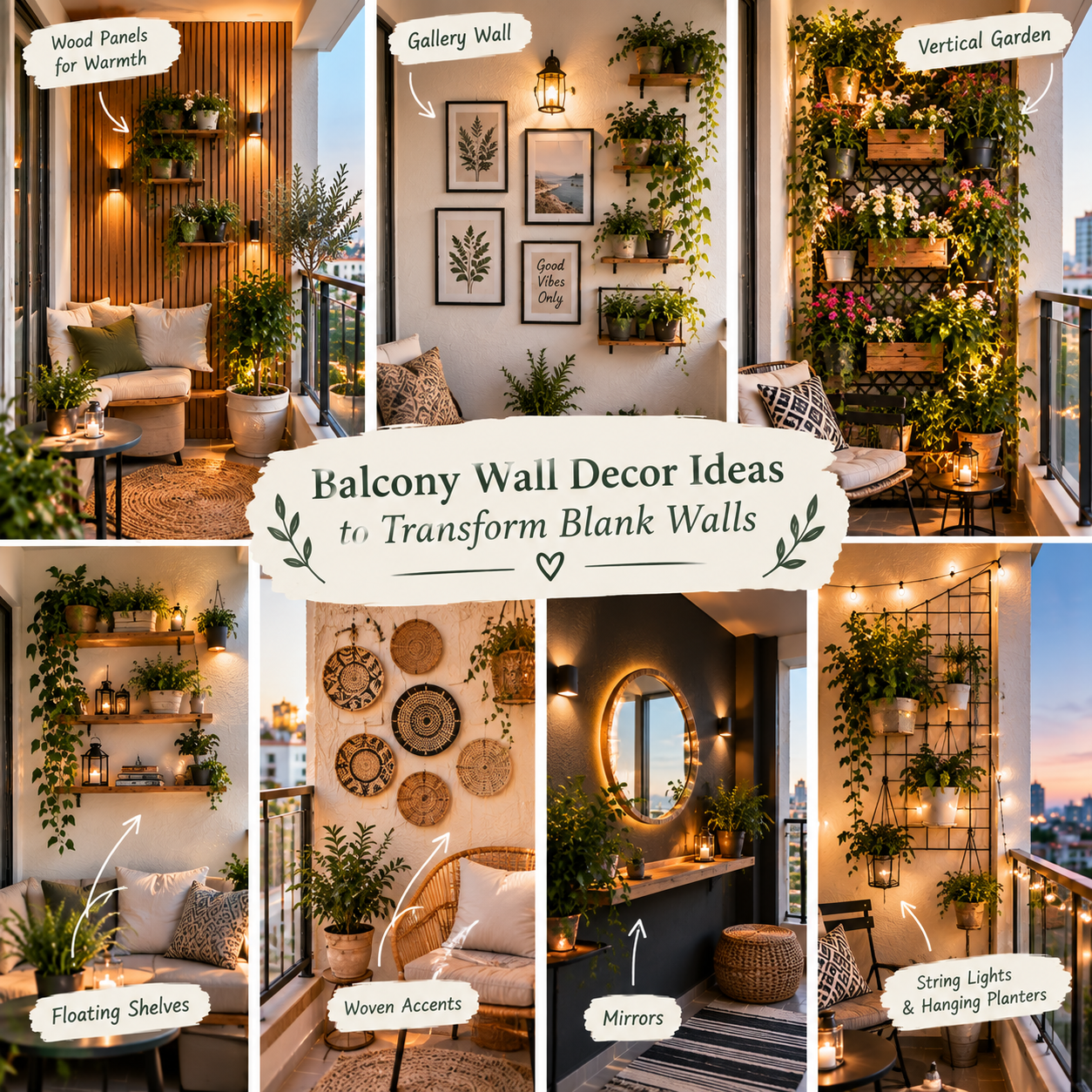
Creating an aesthetically cohesive vertical garden involves manipulating color undertones, tactile pairings, and focal anchors. Rather than treating every wall surface identically, designate one primary vertical plane as the feature wall while keeping adjacent railings clean and uncluttered. This focal anchor draws the gaze away from awkward drainage pipes, air conditioning units, or stark concrete partitions. Integrating complementary hardscape elements, such as vertical wooden slats or blackened metal mesh panels, adds architectural depth even during the winter months when deciduous plants drop their leaves.
Spatial Warning: Never anchor heavy hanging systems directly into exterior insulation finishing systems or thin stucco facades without locating the underlying structural studs or masonry backing. Always verify weight limits with your property management or structural engineer before mounting automated irrigation systems or soil-heavy timber troughs.
Color Theory and Foliage Textures
The interplay of color and texture dictates the emotional resonance of your balcony garden. Monochromatic green palettes featuring contrasting leaf shapes, such as the sword-like fronds of a Boston fern paired with the rounded, coin-shaped leaves of a trailing peperomia, generate visual interest without causing chromatic fatigue. Introducing plants with silver, chartreuse, or deep burgundy undertones breaks up the monotony of standard green foliage. Variegated leaves catch shifting light throughout the day, adding dynamic movement to small vertical surfaces.
- Assess the structural load capacity and wind profile of your specific balcony floor and exterior walls.
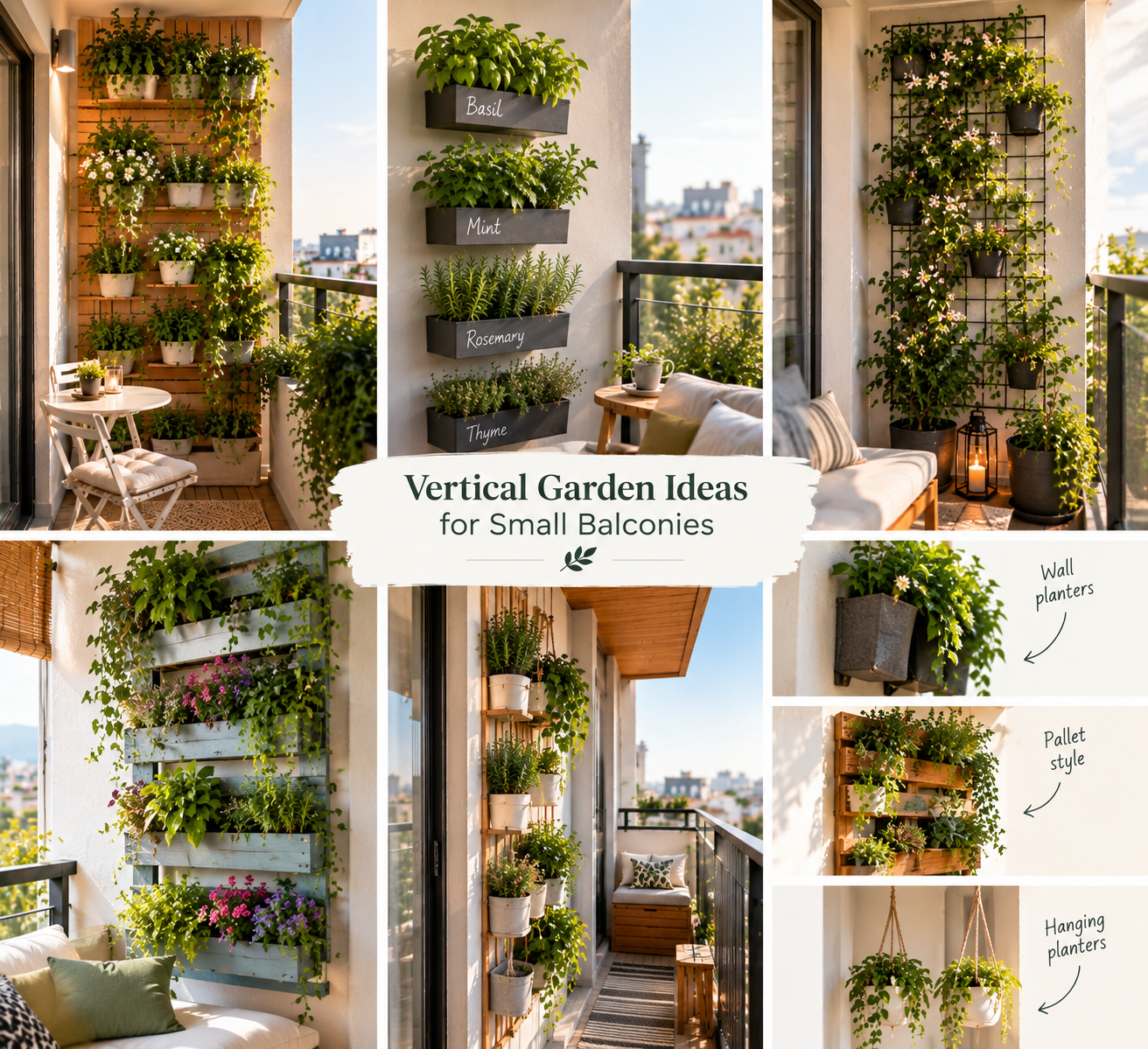
- Select a primary mounting system, such as a modular grid, a freestanding ladder rack, or hanging railing baskets.
- Install a discreet drip-irrigation line or plan a manual watering routine that protects lower architectural finishes from staining.
- Group plants with identical sun, water, and soil nutrient requirements into shared vertical tiers or modular pockets.
- Layer trailing plants at the top to soften hard upper edges, medium-growing shrubs in the center, and upright specimens at the base.
Multi-Layered Illumination and Evening Ambiance
A truly exceptional vertical garden transitions seamlessly from day to night through thoughtful lighting design. Relying solely on harsh overhead apartment lights flattens out the intricate shadows cast by overlapping foliage. Layering your lighting scheme creates dramatic depth, accentuates architectural textures, and extends the usability of your outdoor space well into the evening hours.
- Ambient illumination provided by warm-toned string lights or integrated LED strips tucked behind framing elements to cast a soft glow against the wall.
- Task lighting focused near potting areas or seating zones to ensure functionality during evening plant maintenance.
- Accent uplighting positioned at the base of the vertical garden to cast long, sculptural shadows of trailing stems upward across the facade.
Advanced Planting Techniques for Limited Footprints
Maximizing yield and visual impact in confined spaces requires creative planting configurations. Pocket planters arranged in diagonal arrays or staggered intervals distribute plant mass evenly across a wall, preventing visual heavy-spotting. Espalier techniques, traditionally reserved for sprawling orchards, can be adapted for narrow balcony walls by training fruit trees or flowering vines flat against a trellis or wire grid. This method harnesses vertical plane exposure while maintaining an ultra-slim profile that keeps circulation paths wide open.
Soil composition must also be tailored specifically for vertical environments. Standard garden soil is far too heavy and compacts easily within vertical pockets, choking root systems and retaining excessive water. Formulate or purchase a lightweight, highly porous potting mix enriched with perlite, vermiculite, and organic compost. This optimized substrate guarantees adequate aeration, prevents root rot, and reduces the overall dead weight bearing down on your balcony wall brackets.
Frequently Asked Questions About Vertical Garden Ideas for Small Balconies
How do I water a vertical garden on a balcony without creating a messy runoff?
The cleanest approach involves installing a low-pressure drip irrigation system connected to an indoor or outdoor spigot, paired with a digital timer and a bottom catchment trough. If a direct water hookup is unavailable, use modular self-watering planters equipped with internal reservoirs, or hand-water gently using a long-reach watering wand while holding a shallow tray at the base of the wall to catch stray drips.
What are the best lightweight plants for high wind balconies?
Plants with flexible stems, narrow leaf surfaces, and robust root systems withstand strong wind turbulence far better than large, broad-leafed tropicals. Excellent options include ornamental grasses like blue fescue, hardy succulents such as sedum and echeveria, rosemary, lavender, and trailing tough varieties like creeping thyme and periwinkle.
Can I set up a vertical garden on a rental apartment balcony without drilling holes?
Yes, non-invasive installation methods are widely available and highly effective for rental properties. Floor-to-ceiling tension rods, heavy-duty weighted freestanding plant ladders, and heavy-gauge railing hooks that clamp securely over balcony balustrades allow you to mount extensive vertical gardens without penetrating exterior stucco, siding, or concrete walls.
How do I protect my vertical garden plants during freezing winter temperatures?
Container-bound plants on elevated balconies are more vulnerable to root freezing than plants planted directly in the ground. Protect perennial varieties by wrapping modular pockets or exterior wall frames in breathable frost cloth, clustering pots tightly together near the interior apartment wall to absorb radiant heat, or relocating sensitive potted specimens indoors during severe cold snaps.
What is the best way to arrange plants in a vertical garden for maximum visual impact?
Adopt the design principle of visual weight distribution by placing heavier, darker, or larger-leafed plants toward the lower and central sections of your vertical display. Position cascading, fine-textured trailers near the top to gracefully frame the installation and draw the eye smoothly downward along the vertical axis.